 Grove of Aspen trees in Northern Utah. Until recently I did not know that a grove like this can be all one interconnected living thing. Pretty amazing. Below, another view of the same stand of Aspen.

Grove of Aspen trees in Northern Utah. Until recently I did not know that a grove like this can be all one interconnected living thing. Pretty amazing. Below, another view of the same stand of Aspen.
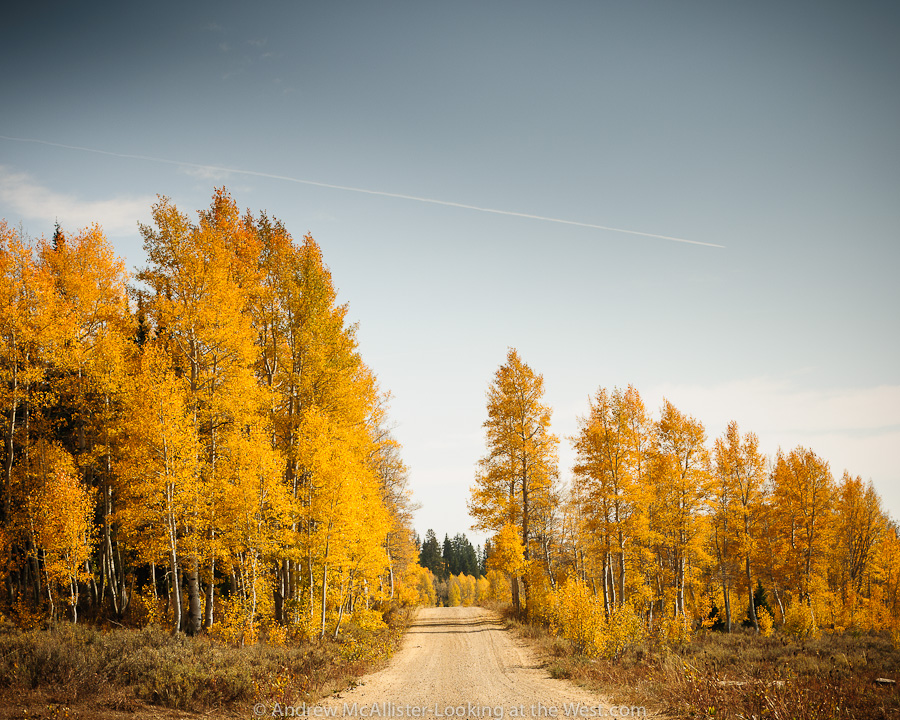 Fall color is in full swing here in Utah. Hope everyone is out enjoying it, I know I am. Last year I missed most of it due to travel so this is my first real Utah fall. It is amazing! In the coming weeks I’ll be posting more fall color, images from the Tetons, another Moab trip and an entirely new series. Hope to get things caught up before it starts snowing. Have fun exploring your world!
 After a year living in Logan I had the opportunity to drive up to Logan Peak (elevation 9710) this past June with my friend Carston and wow, what a drive it is. As with most drives in the Wasatch-Cache National Forest all but a few sections can be handled with a normal all wheel drive car and competent driver. In this case we passed a Honda Element (not high clearance vehicle) a mile or so from the top and it really was not until the last 100 yard that I had to put the Xterra into 4-wheel low. If you live in the area you should give it a visit sometime. The fastest route is via Logan Canyon and Right Hand Fork. From there go up Crowley Canyon (Forest Route 047) at the junction go west on 052. The next major turn is at White Bedground Camp with the way to Logan Peak well marked (Forest Route 168). This stretch of road goes through a really nice and well developed Aspen grove, has some fun switchbacks and a nice climb at the end where there is a parking area. At this point you will stay left on a nicely graded section of road, not the steep and rocky side trail to the right. The trail stays relatively flat until the last turn onto Forest Route 042. A mile or so later you will be there. This last section I would not attempt in a normal street clearance vehicle as there is a short rocky section that may stop you and the last section before the radio tower that will stop you for sure, plus it would be a pain in the ass to back out. The roads in the area close November 15 or earlier depending on winter weather.
 Above: View from the top looking East. The road is Forest Route 042. As a side note the day we drove up there was a race and the road was packed with runners and mountain bikers.
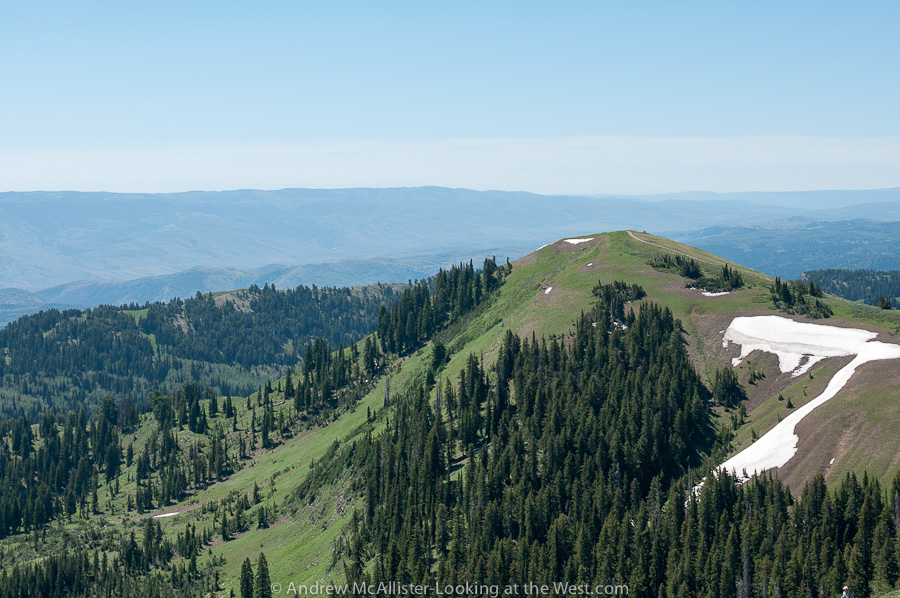 Above: Last bits of snow hanging on.

Above: Looking North West from Logan Peak June 2012. These photos give an idea of the place and I would consider them location scout shots. The views would really be stunning on a cool fall morning at first light. I guess that means I have a return trip in the coming months. Yeah! One final note, access to Logan Peak via Providence Canyon was closed as of June 2012 to vehicles (Impassable). If you plan on visiting via that route check with the ranger station to confirm that Forest Route 090 is open.
 Above: Willard Peak from Willard Basin. About an hour drive from the start of the trail, almost to Inspiration Point. I first drove this on a whim last summer and had no idea how cool the view from the top was. I’m so happy to live near such amazing places.
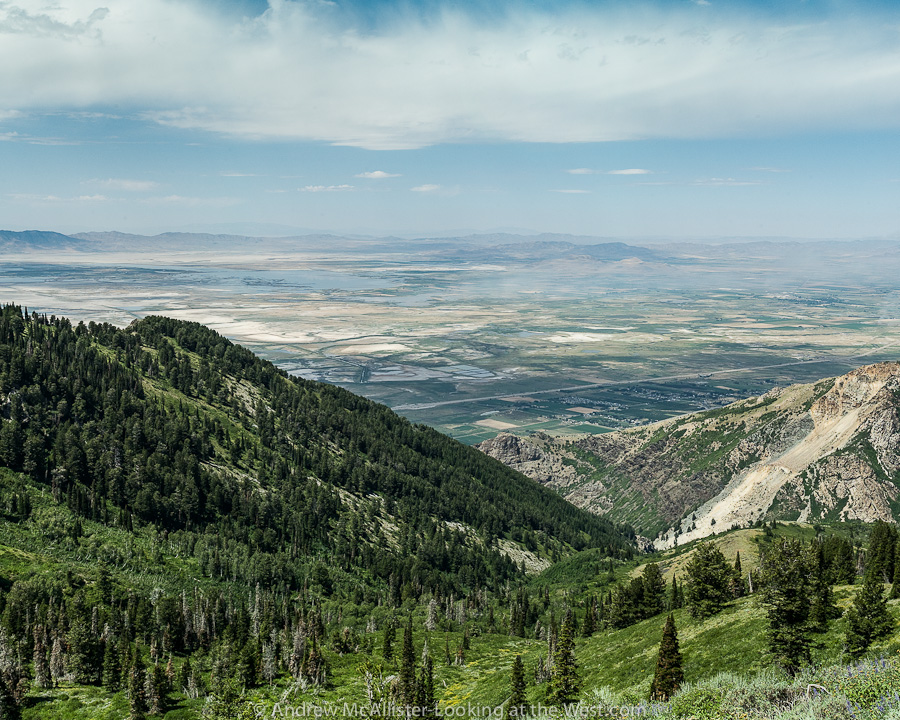 Above: Almost to the top, looking down toward I-15 and the northern end of the Great Salt Lake. Smoke from wildfires have made theses views impossible this August.
 Above: From Inspiration Point looking down toward Ogden. Amazing view with no hiking required.
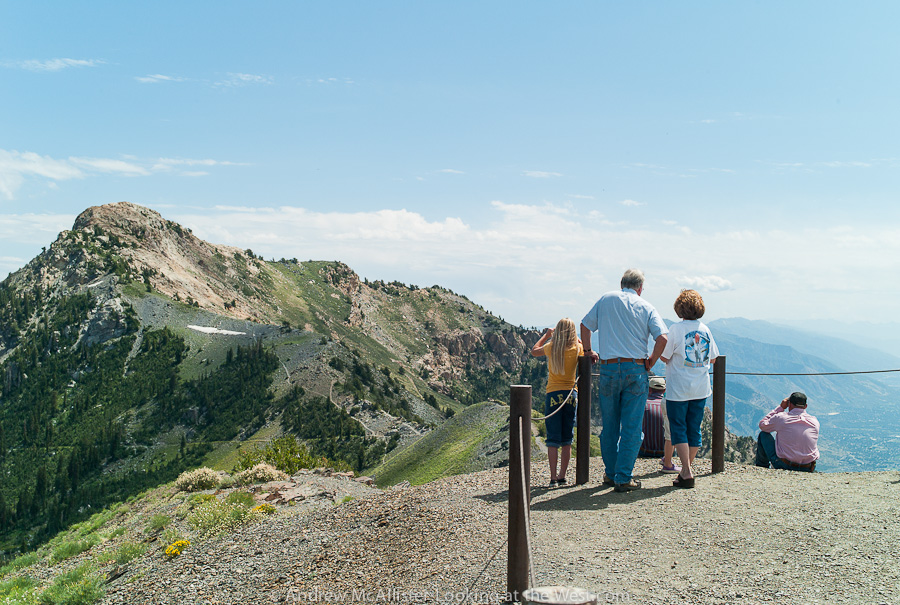 Above: Looking at Mountain Goats on Willard Peak.
 Tremonton is a small Northern Utah town near the I-15 and I-84 split and is the last town with a built up commercial district before Idaho. It’s a place I have wanted to photograph for some time but as it turns out it is a tricky one. It has a typical Main Street that is essentially a fast moving but narrow part of the road with the usual lawyers, hardware store, storefront gym, chinese restaurant. Unlike other small towns I have posted about it lacks an ideal intersection or classic group of buildings. In my wandering about I am attracted to how old commercial buildings learn. They start as one thing, then changes are made for new uses and their appearance becomes a conglomeration of the past and present. On my first visit to photograph it was the buildings with large murals that caught my eye. The image above I really enjoy for it’s scrapbook feel and the image below for it’s understated somewhat somber feel.
 Areas like the one below are usually my first stop. They have so much going on and give clues to the economic reality of the downtown. In this case I would say things look good (lack of trash or graffiti, windows still functional etc.). The harsh midday sun makes a cool shadow of the dish mounted on the wall. The neat cluster of objects around the window. The two doors so close to one another and the three strong verticals and the collection wires that make a mess of an otherwise ordered area. Great location.
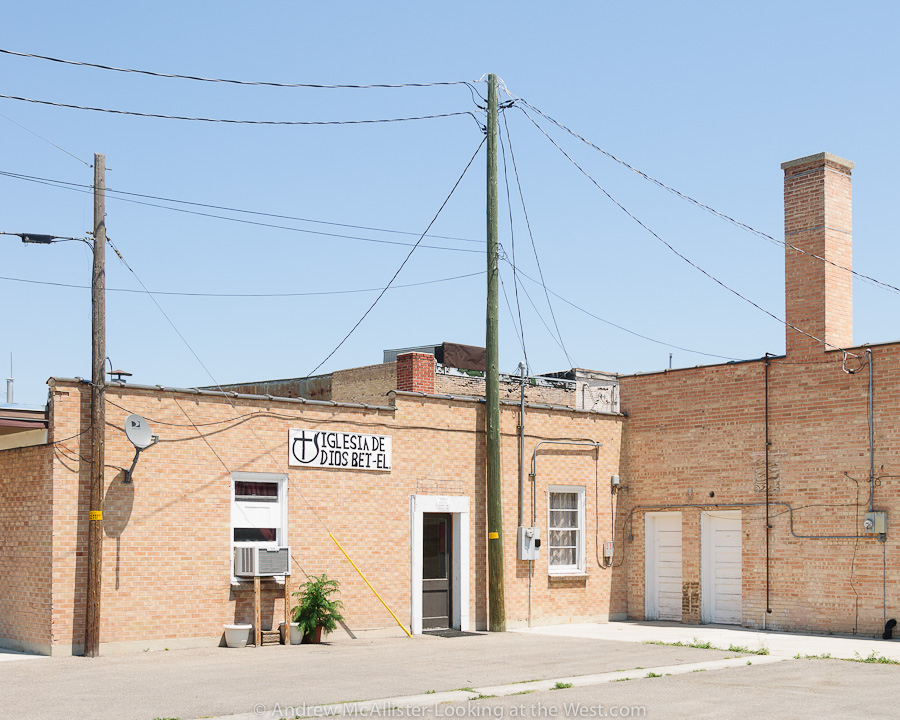 Lastly we have Main Street and a huge featureless brick wall. There are a few other building that I did not photograph that have potential. One is a huge old Sinclair station with a large neon sign, plate glass windows and an old style canopy. Tremonten is close enough to Logan so I’m sure I’ll be exploring and photographing it some more.

 My past eight posts have been about Southern Utah and my trips to Canyonlands and Arches National Parks. The landscape is so dramatic there that it has been a struggle to get back in a Northern Utah frame of mind for the blog. However slow posting does not mean I have not been out looking at the west and exploring. Shortly before leaving for Moab I met up again with the Utah Xterra Owners Club for an afterwork outing on Skyline Drive above Bountiful. When the outing was first being discussed I had misinterpreted where we were meeting and discovered that there are many skyline drives in Utah. Our trip that evening was cut short due to a gate being locked but we did find a few nice spots to pull over and enjoy the sunset. Though the view is nice the overall experience is a bit squalid. The area was crawling with people most of whom were on ATV’s and dirt bikes and many more camping on the side of the road. Literally on the side of the road. Like not even ten feet from the road. Needless to say this area is not on my list of places to camp. However the view is worth it and I saw more than a few 2WD cars up there so give it a look if you are in the area. The road starts near the big “B” above Bountiful. When the road is fully open you can drive all the way up to Bountiful Peak (elevation 9259 ft.)
 The photo above is from another Skyline Drive. This road is in the Caribou National Forest just over the Idaho border. Given the location you will see more cattle than people and the area was ATV free during our visit. I would recommend starting from the Cache Valley side vs. the I-15 side as it’s a bit tricky to find the road on the west side. From the small town of Weston head west toward Weston Canyon. The road to Dry Canyon Campground is the road you want to start the drive. It’s a decent gravel road and not challenging. The views are not spectacular in a postcard kind of way but subtle, relaxed and quite. When I came across this small herd of cattle tucked away along this creek I had to stop and take a picture. It really says “the west” to me.

Found this little town during one of my recent explorations of Northern Utah. A one stop sign town with a mostly nice commercial district. Few places to actually stop into but many buildings seem occupied to some extent (a good thing). Garland was a company town based around the Utah Sugar Company. A brief history can be found on the Garland Utah website.

Above: a tractor at the main intersection in Garland, Utah. The yellow brick commercial building has signage that suggests that the Bank of Garland was once the occupant.
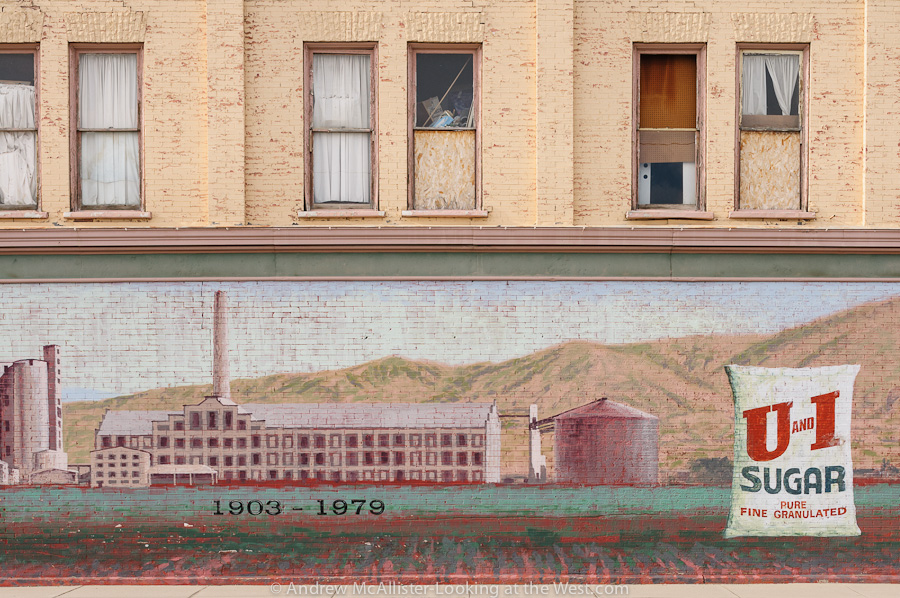
Above: mural showing the Utah Sugar Company building. Much of the complex has been removed though the smokestack remains.

Above: nicely maintained yellow brick commercial building. Looks to be fully occupied, a good thing for the life of a building and the downtown in general.
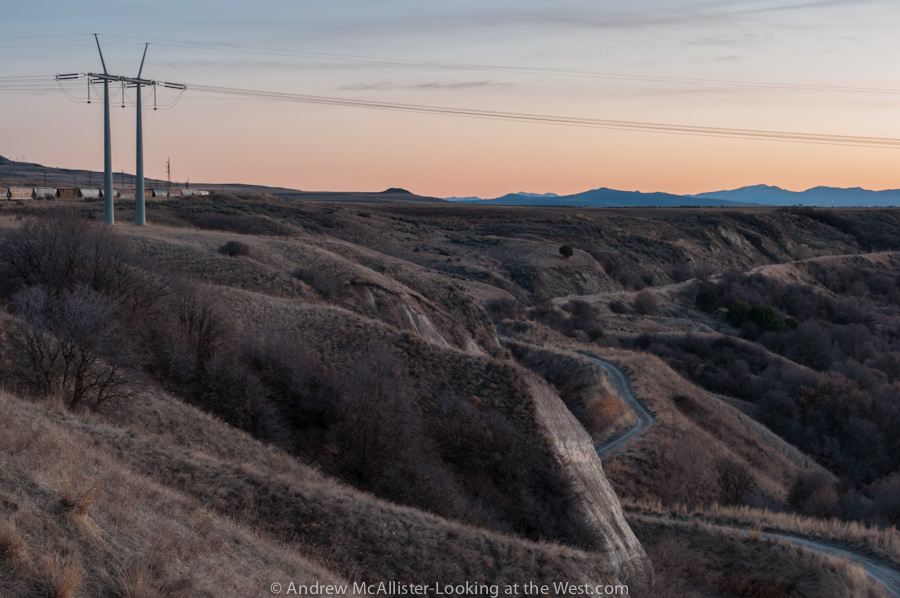
Northern Utah landscape near the Bear River Narrows at Wheelon. The small road in the image follows an irrigation canal on the east side of the Bear River (out of frame on the right). I’m attracted to the contrast between the natural roll of the gullies and the hard cuts of the man made canal.
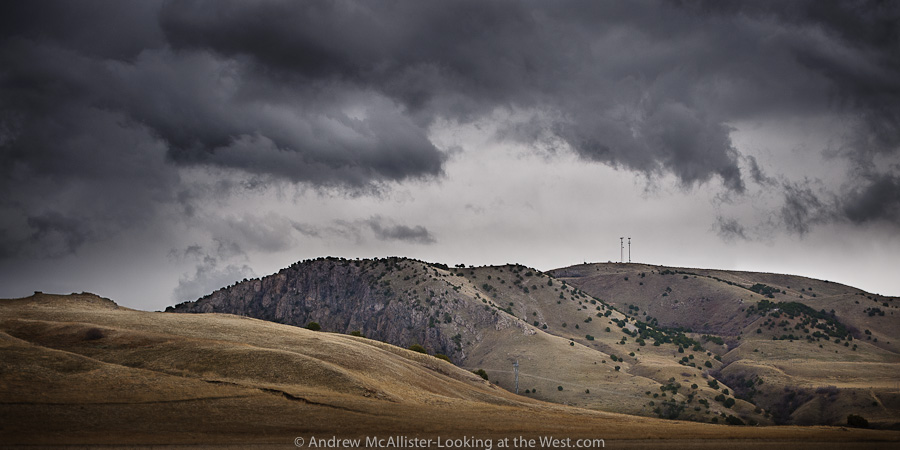
Cutler Dam area, Cache Valley Utah. Taking advantage of a winter storm that was blowing into Northern Utah I revisited some areas that could benefit from some drama in the sky. Between Gunsight Peak and the northern end of the Wellsville Mountains is an area with dramatic cliffs with velvety hills and washes. The landscape of this area has fascinated me since moving to Cache Valley. Unseen from this view is a large dam and power plant tucked between the cliff and the river. The area has walk-in access for hunters, I need to find out if I could walk-in for photography or wildlife observation. If not maybe I could get a hunting license, register to walk-in and then “hunt” for photos and “shoot” them. Until then I’ll respect private property and stay on the road.
Technical info: Images captured with a Nikon D300s and 45mm PC-E lens and processed in Lightroom 4.
Soundtrack for gloomy weather photography: Crime and the City Solution and Nick Cave and the Badseeds.

This past February 18th I joined up with the Utah Xterra Owners Club for their annual Pony Express run. Since moving to Utah this past summer and acquiring a 2006 Nissan Xterra I have been keen to get out and explore many of the canyons around Cache Valley. This past summer and fall the Utah Road and Recreation Atlas (Benchmark Maps) has been top on my reading list for finding new places to explore. One place I have been really interested in is the west desert area of Tooele, Juab and Millard counties. The area is also called the Great Salt Lake Desert and includes the Dugway Proving Grounds (no public access), The Pony Express Trail and a portion of the Historic Lincoln Highway. Plus it’s a really big wide open place with small mountains that look like islands and has tons of potential for photography. If that wasn’t enough my long standing project about looking at the west has up to this point primarily consisted of images showing how we experience the west through visiting National Parks. Joining up with an automobile club would be both fun and new way to think about how we experience the western landscape and meet some fellow Xterra owners.

We planned to meet at 9 AM in at a gas station in Lehi. This was my first time here and I have to say I was impressed with the town’s old commercial district and the grain silo. It was a perfect sunny morning with lots of activity going on. When the group of Xterra’s I was in pulled up to the gas station there were about 20 Land Rovers leaving on some adventure. Then I saw a group of road cyclists (about 30 strong) heading up the road. This must be a popular place. After everyone in our group of 11 vehicles had fueled up and did whatever we needed to do at the gas station we headed out taking 73 west toward Cedar Fort for about 30 miles then hit gravel road at Five Mile Pass and kept going west. After a short distance we stopped as a group to take the opportunity to air down our tires. This was something I was initially wary of doing since I did not have a way to air them back up. Talking to a few drivers I learned that by deflating the tires it would provide better grip and also absorb some of the road vibrations. With over 100 miles to go I decided to air down slightly and see if I noticed any difference. It was hard to tell how much difference it was making for my ride as I only aired down about 7 pounds. I’ll have to experiment with this more on future runs.

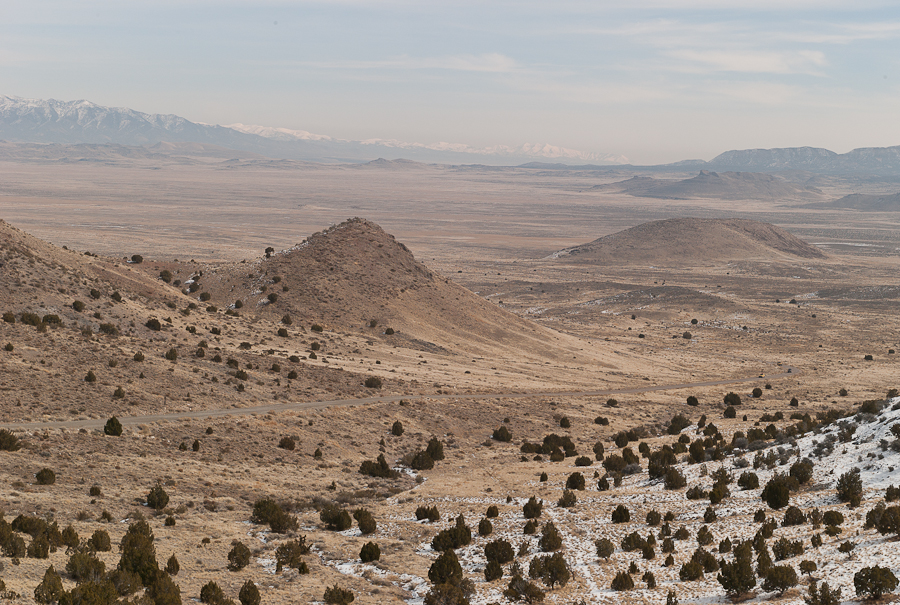
Our next stop was Lookout Pass Station. We climbed a small hill had a look around, snapped some pictures of our vehicles with their first mud of the day then headed down to the walled off pet cemetery at the base of the hill. We attempted to drive up Little Valley Rd. on our way to Simpson Springs but due to bad road conditions we decided to head back to the main Pony Express Road. Being new to 4-wheeling it was one of the muddiest sections of road I have been on. I think it was a good decision to turn back and try it again when it has dried out.

Soon after we arrived at Simpson Springs Pony Express Station and stopped for lunch, conversation and picture taking. The highlight of the stop was watching a helicopter rounding up what I assumed to be wild horses. After some time the horses actually ran pretty close to where we were parked and everyone tried their hand at photographing the action. I got a couple of shots off before my camera battery mysteriously died. After some time we geared up and headed west toward Dugway Pass. Between Simpson Springs and Dugway Pass it’s about 20 miles of straight and flat road. Leave plenty of distance between vehicles (dust and visibility) and watch your speed. It’s easy to start going fast and you have to remind yourself that gravel roads handle very differently from highways. A hole in the road or dip could put you in a bad situation a long way from help.


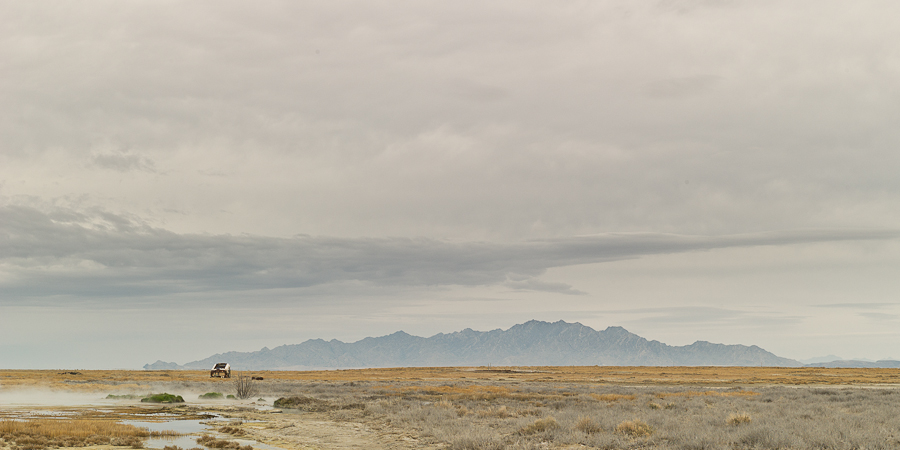
After a restroom break at Fish Springs National Wildlife Refuge we stopped at Wilson Hot Spring. This was where my Xterra got muddy. The drive out to the spring was a sticky mix of mud, sand and salt. At one point I was sliding toward a very wet patch that had boards across it; some kind of sign not to go that way. Luckily I stopped before sliding into it and was able to back out and take the little bypass. The sticky mud reminded me of a passage in Earl Swift’s book The Big Roads, “a truck convoy finding the Siberling Cutoff impassable, set off across the salt. This would have been a risky move in a light runabout. In a giant cargo hauler the results were inevitable. every truck that ventured onto the flats broke through and became hopelessly mired; even a Caterpillar tractor failed to achieve any traction in the stinking goop that lurked beneath the surface.” (page 68). The story ends with the trucks being carried out by hand. I’m glad to be living in a time of better roads and capable vehicles. The story is a good reminder of the dangers of traveling in the west desert of Utah.

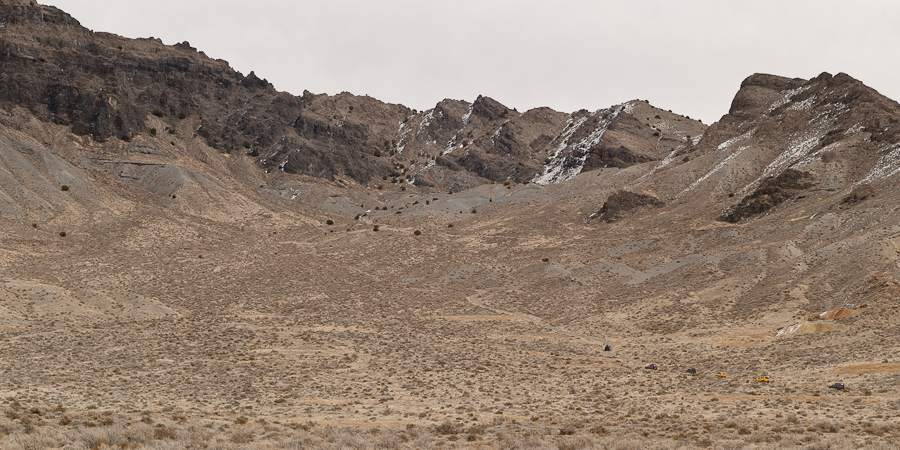
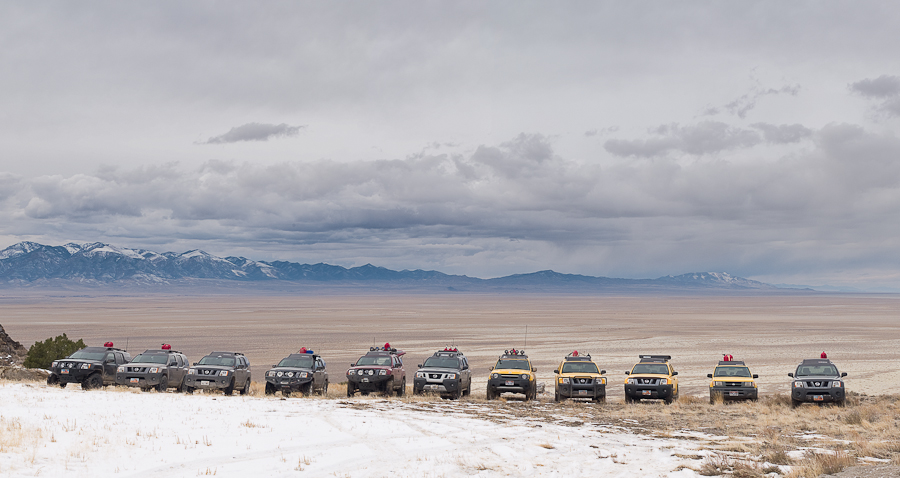
A little farther down the road on the other side of the Fish Springs Range we took a side road at the Utah and Emma Mines. It was a nice climb up to the top. I waited on the main road until the end of our convoy as I wanted to get a shot of all the Xterras going up the road before I joined the party. The drive up the old mining road ended with everyone parking in a row with a spectacular view of the Deep Creek Range and Snake Valley. In low range and third gear I only had to tap the brakes on a few sharp bends in the road on our way back down. At this point we would be heading in generally North West and would go through the very small town of Callao.

About 5 miles out of Callao we turned onto a section of road that is marked both as the Pony Express Rd. and the Old Lincoln Highway. Except for one spot the road was dry but it was slow going as the road wound through many washes and small hills. This was the only part of the trip where we had traffic coming from the other direction. I can only imagine what it must have been like traveling in this area with a 1930’s or 40’s era vehicle (loose steering, breaks that lock up, no seat belts) and then coming around a curve to find another car headed your way. After 25 miles we were back on asphalt. Realizing we had missed the turnoff to take us to Gold Hill; members of our group talked via radio to see who wanted to go to Gold Hill and who wanted to just head to Wendover. Most of us decided to go to Gold Hill and arrived around 5 PM the place was literally a ghost town. I now understood why there were so many photos on the web of this old store front. It’s about the only thing there. I joined in and shot about 30 frames of the building from a few angles so I could stitch together a panoramic image of the place.


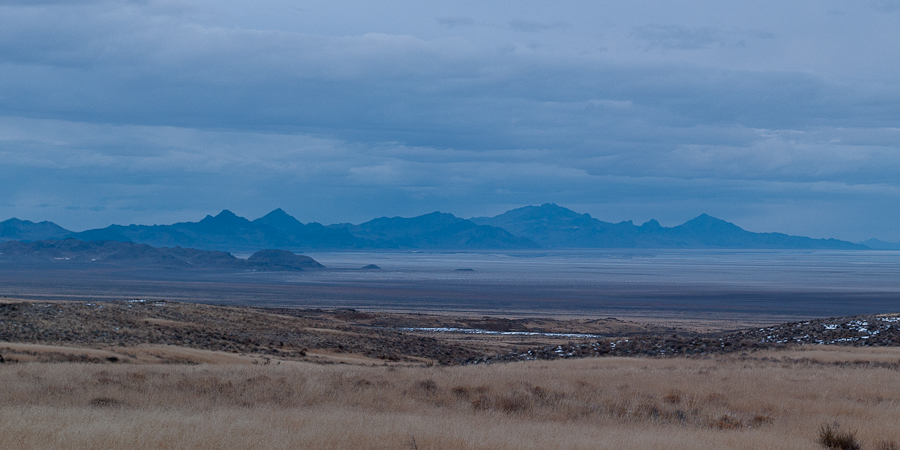
Next stop Wendover. A quick dinner and then the trek back to Logan. Since a winter storm was hitting the Wasatch Front I opted to take a northern route back to Cache Valley via the Old Midland Trail (Utah 30) and hopefully avoid traffic and snow. As it turns out it was the best option. In two and a half hours I made it to Tremonton and entered Cache Valley via Riverside. At Beaver Dam the snow had started and the road conditions deteriorated rapidly. Crossing the valley the snow just kept coming and traffic slowed to a crawl. My journey that had started at 7 AM that morning was completed 17 hours later at 11 PM. The only trouble I had was getting up my steep and snow-covered driveway. But I made it.
©2012 (images and text) Andrew McAllister
All images photographed with the Leica M8 and Zeiss ZM lenses.
 Looking at the West