Exploring around Moab: Fisher Towers

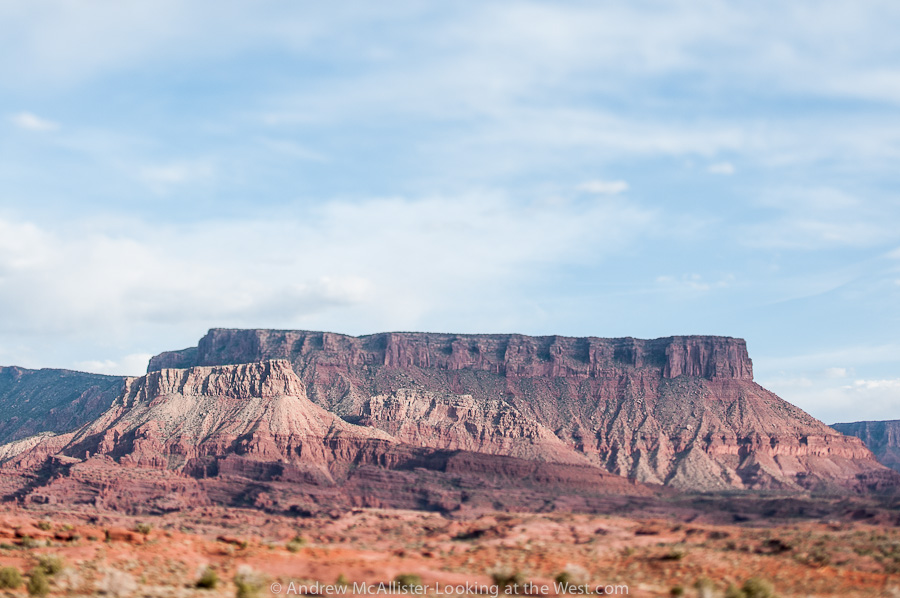
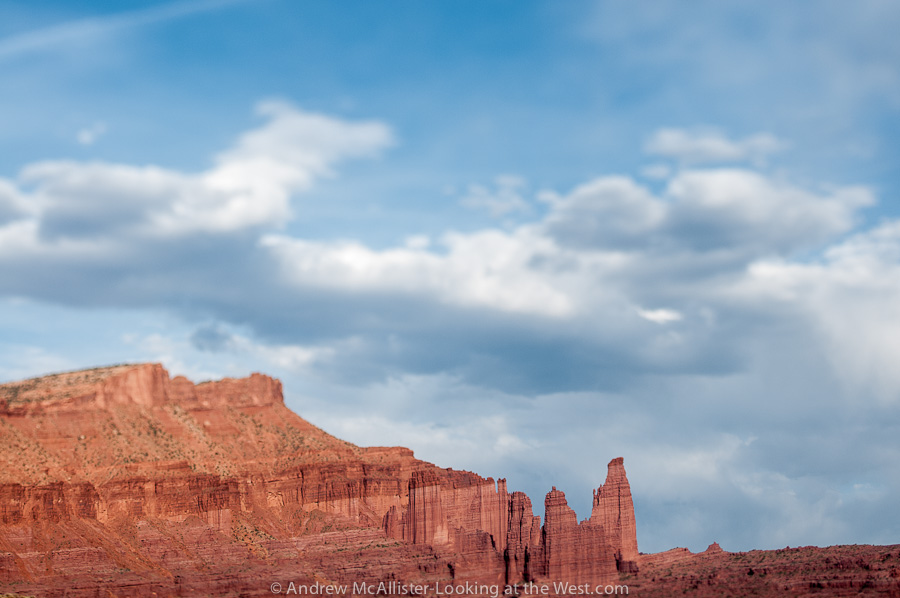
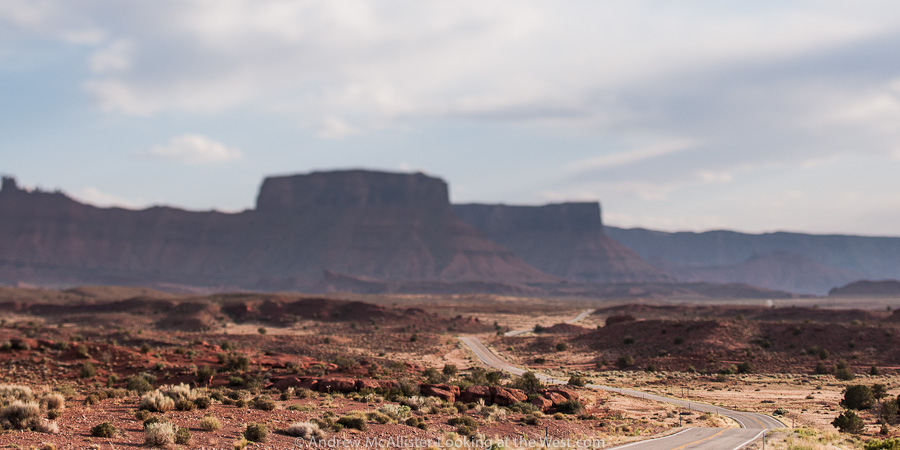
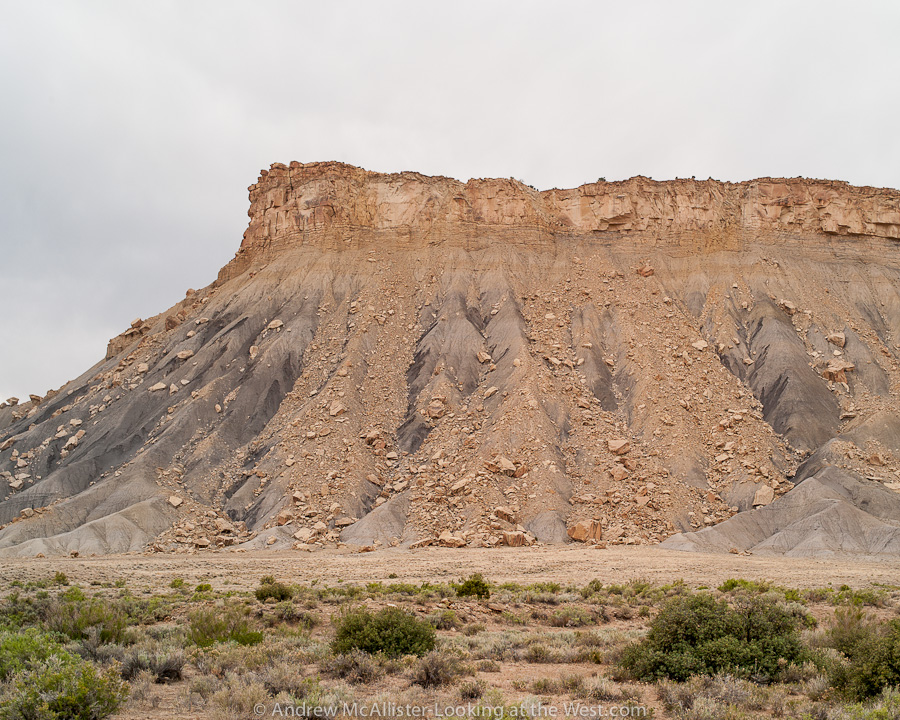
On our last trip to Moab we decided to not just take 191 south from Cresent Junction but instead go north of I-70 and do some exploring in the Book Cliffs and Sego Canyon. That part of the adventure ended in the (almost) ghost  town of Thompson Utah and the next part would be the Colorado River Scenic Byway. A pullout near Fisher Towers would be the location of a quick road side dinner and some creative photography. Recently I have become interested in the technique of tilting the camera lens for artistic and technical effects. Most of the examples I have seen are of city or industrial scenes so I thought I would try it out on some southern Utah landscapes. Above: Fisher towers. Below: Mesa near Fisher Towers with tilt blur effect.

Below: Fisher towers with with tilt blur effect on the sky and the top of the red rock.

Below: Road into Moab (128) with tilt blur effect. It takes some practice using the lens in the field and getting the effect where you want it. The look is easily faked in Photoshop, for me though it is way more interesting to think about and apply the technique in camera.

Exploring Canyonlands: Beef Basin

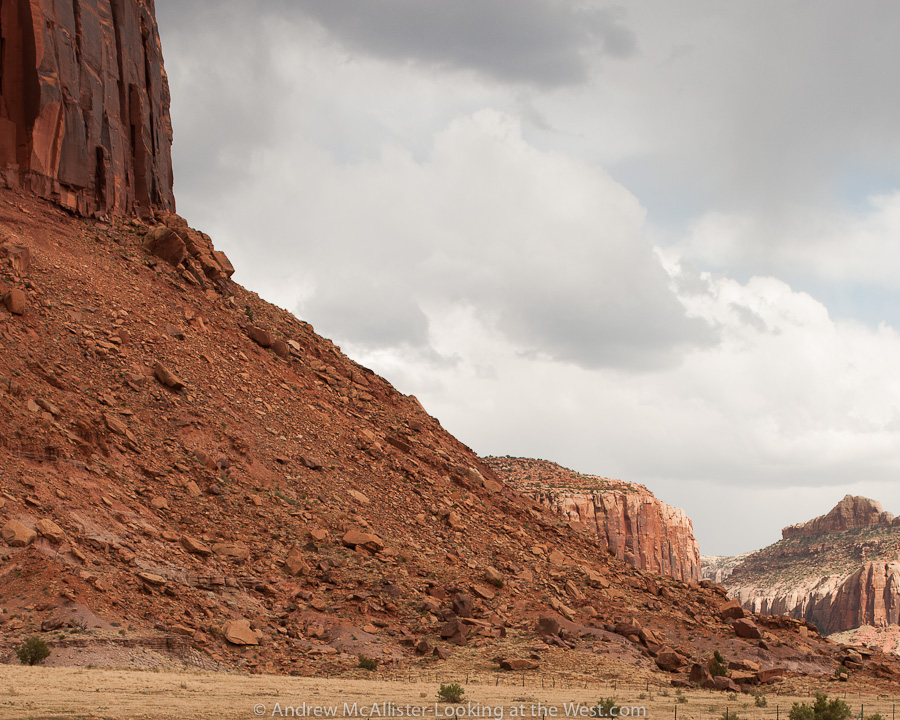
Above: Mesa’s along Route 211 toward the Needles District of Canyonlands National Park. This image was taken at the end of our drive to Beef Basin. In the casual photograph it’s hard to get a feel for how massive these forms are. To capture that feeling I chose to use a normal focal length lens and a position that would not include the top of the mesa. When you see the fence at the base of the mesa you start to get the feeling of how massive it is.

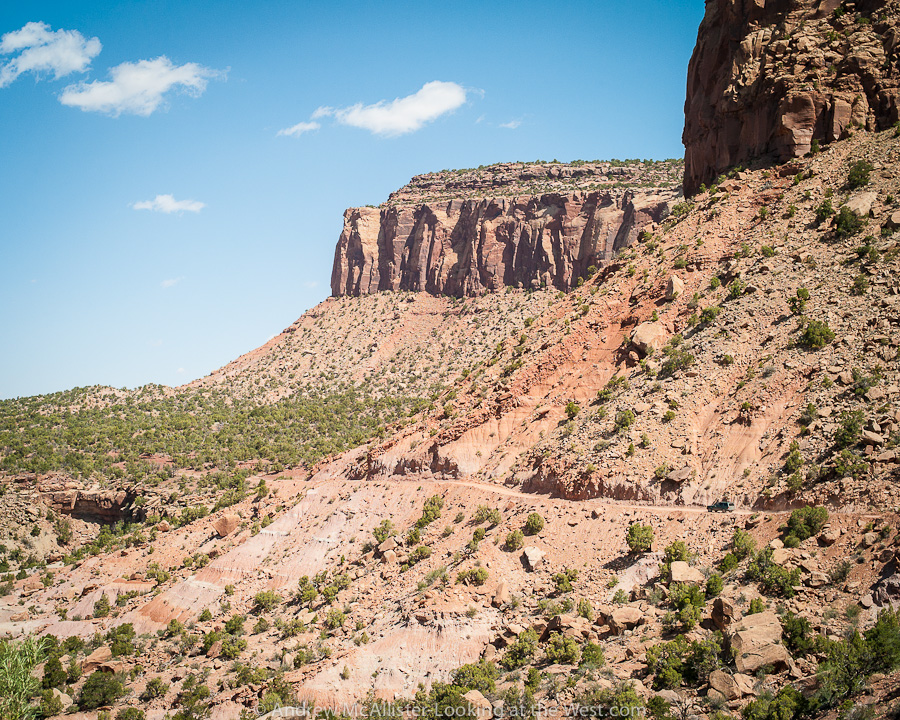
Above: Cottonwood Canyon Road as it rounds Bridger Jack Mesa. Notice the car on the right side for scale. The road was in really good condition (May 2012) with a few washboarded sections and small obstacles. I think of these roads as the domain for 4-wheel drive vehicles but as with other trips you come across the odd car that you wonder how it got there. On this drive it was an old Volkswagen Squareback (early 70’s) in mint condition complete with a driver with small round sunglasses and a waxed mustache.

Above: Salt Creek Overlook. Near Cathedral Butte there is a side road that will take you out to this viewpoint. In the book Guide to Moab, UT Backroads and 4-wheel Drive Trails this section of road is listed as moderate as it is quite rocky. We drove halfway in before deciding to walk. With a little more experience I could have driven it as the Xterra has the ground clearance but today was not the day to attempt it. Next time for sure though. The walk out to Salt Creek Overlook was a easy and a nice change as we had been in the car a few hours at this point.

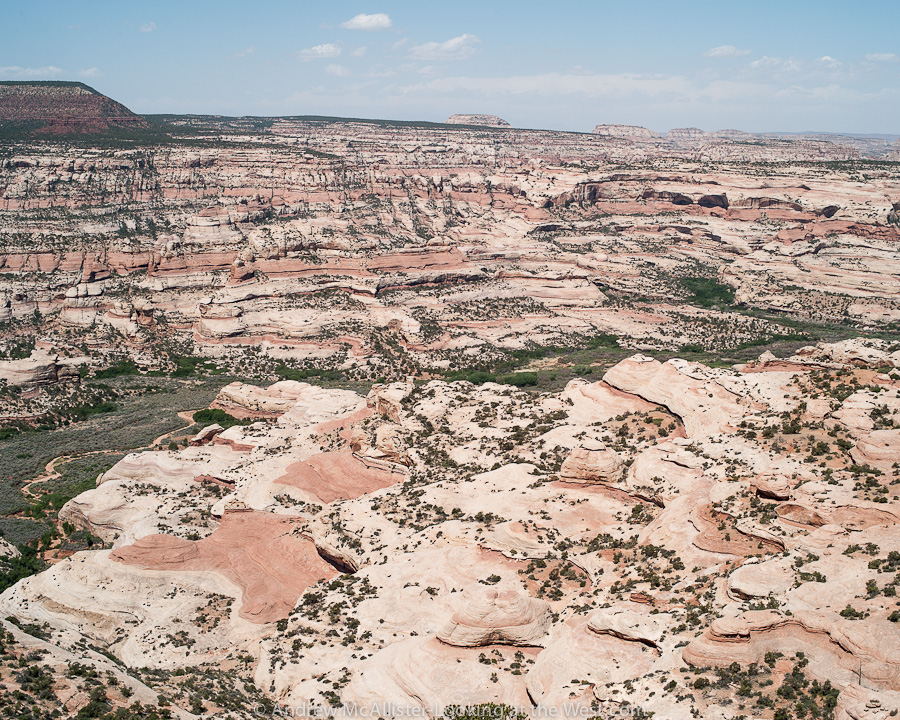
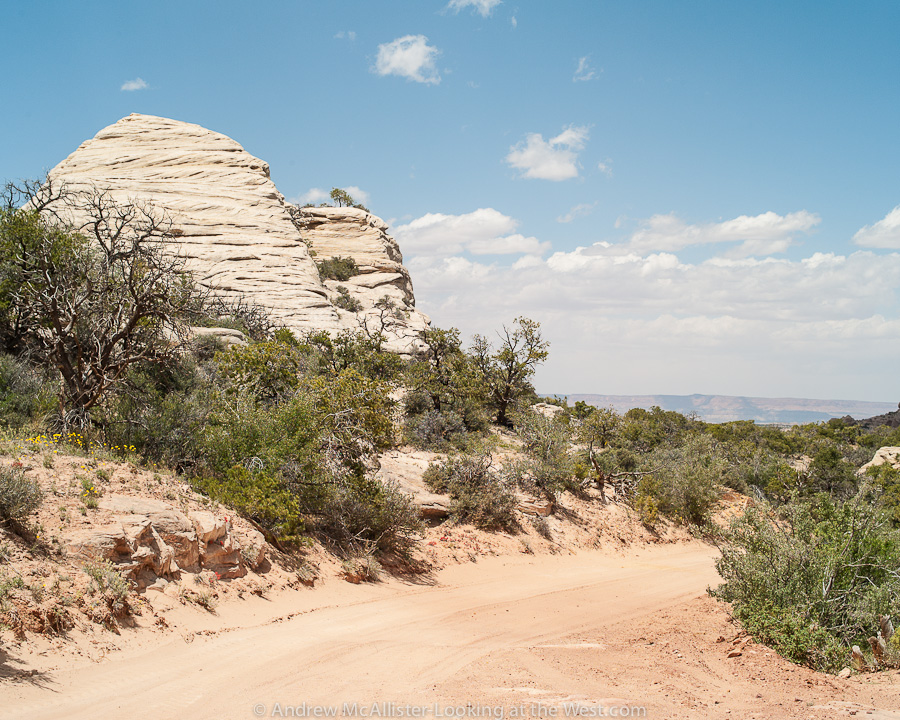
Above: Almost to Beef Basin we stopped for a look at these large white rock formations and to stretch our legs a bit. Just after this section of road there is a steep and sandy section with large rocks and a blind corner. A bit stressful as it was my first such stretch of road however a few miles later I would be reminded that thousands of cars have made it back up that the steep sandy spot when we came across the old Volkswagon.

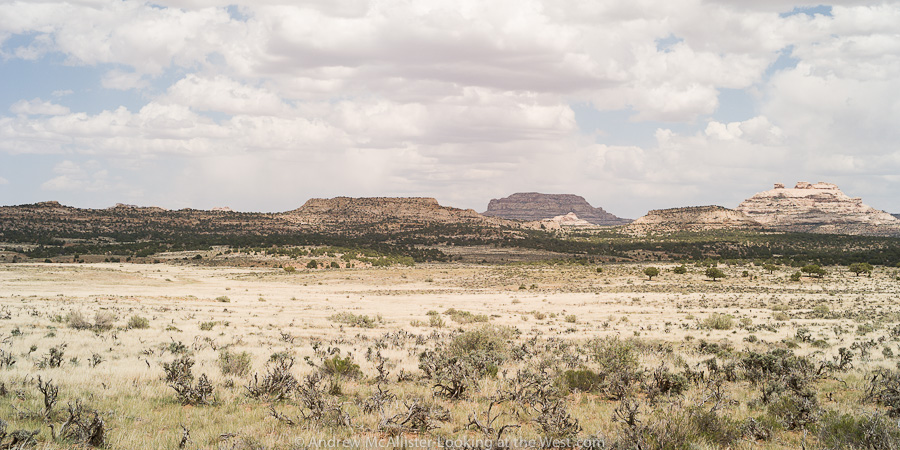
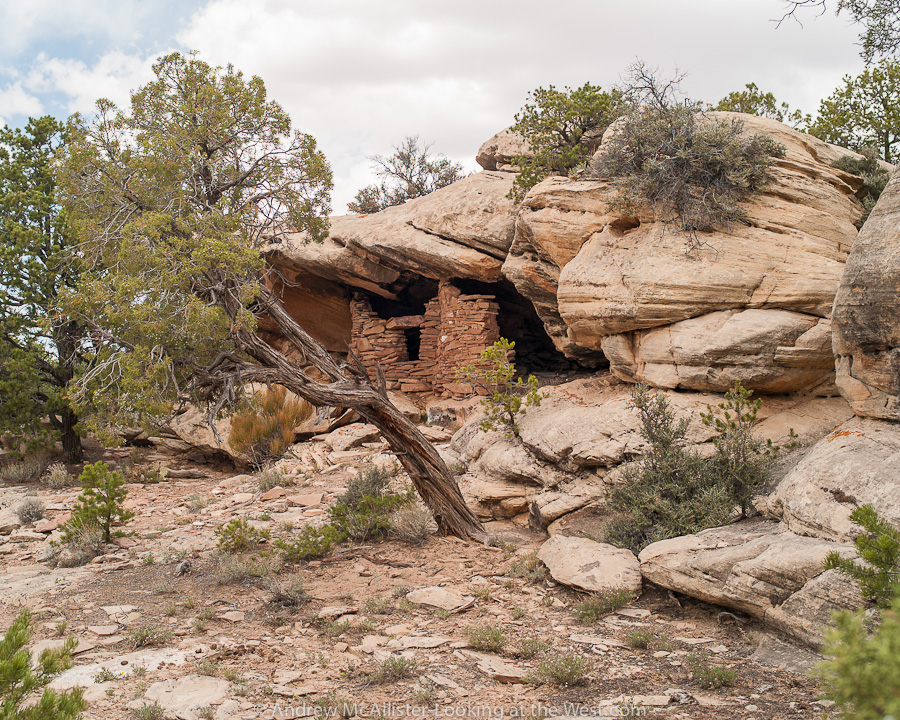
Above: Classic western landscape of Beef Basin. Below: One of the many ruins in Beef Basin.

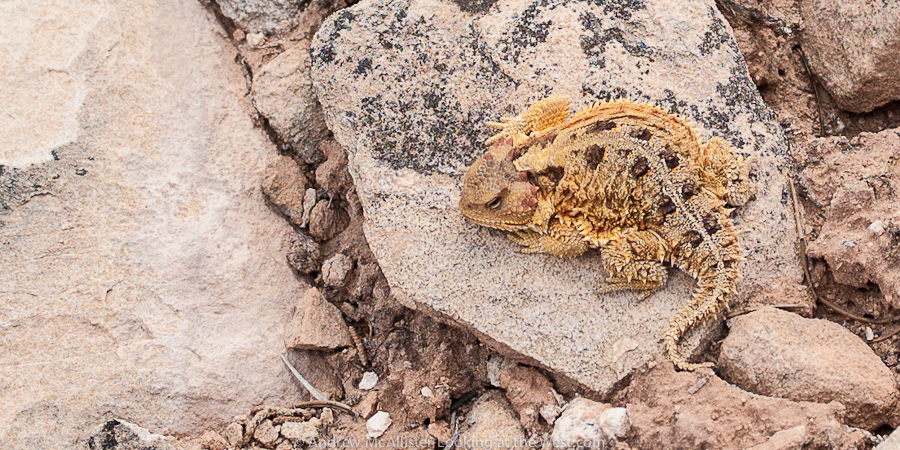
Below: Greater Short Horned Lizard spotted at South Spring Campground.

Below: As we finished the Beef Basin loop the weather started to look as if a storm was brewing. We decided it was best to start our return as it would be a few hours until we reached asphalt and another hour to get to Moab. Fortunately the only weather encountered was random spots of raindrops and nothing that would make the return trip difficult.

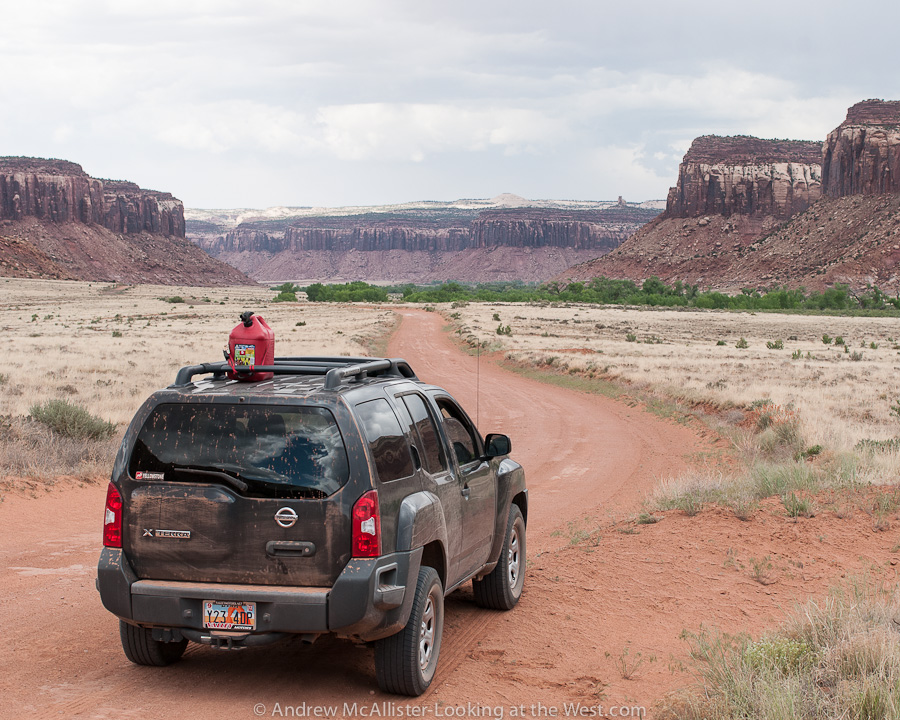
Below: The Xterra on Cottonwood Canyon Road. I brought extra gas not knowing what kind of milage we would get on the back roads or what we would run into. Turns out we only used a bit more than half a tank up to this point. In the future I hope to replace the rear bumper with one that will accommodate the spare tire and have room for Jerry cans so I don’t have to keep the fuel on the roof.

Exploring around Moab: The Book Cliffs

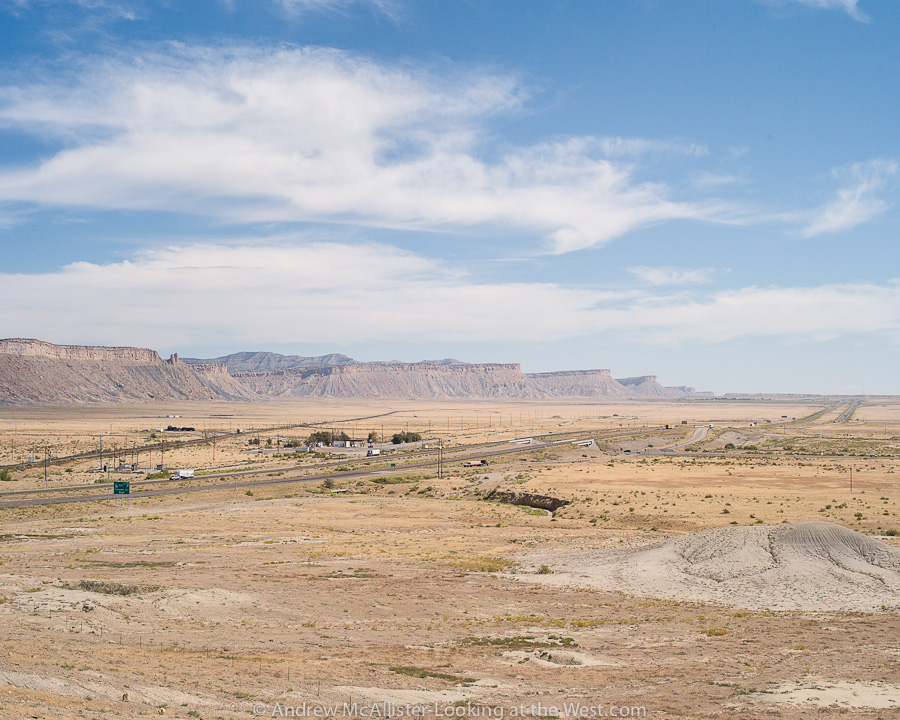
Of the half dozen times I have been to Moab my latest visit was the first time I had the ability to drive some of the areas back roads and discover some amazing landscape. On my last visit I picked up a copy of Charles Wells book Guide to Moab, Ut Backroads & 4-Wheel Drive Trails and have spent some quality time reading it’s contents. The first trail in the book is the Book Cliffs & Sego Canyon (suitable for stock 4-wheel drive SUVs). The above image shows the Book Cliffs and Crescent Junction as seen from the I-70 rest area. By the time I get here I am ready for Moab, however this time Moab would have to wait for several hours.

Above image: the Xterra at Thompson Pass with the first trail dust of the trip. Below: The road through Thompson Pass to our first waypoint. From there we would follow a wash for a few miles then climb up to the top via a steep windy section of the trail. The trail goes through some great scenery as it winds along and is fun to drive.  Having to keep an eye on the road I did not stop for many pictures. Highlights included spotting a Pronghorn and an Eastern Collard Lizard.

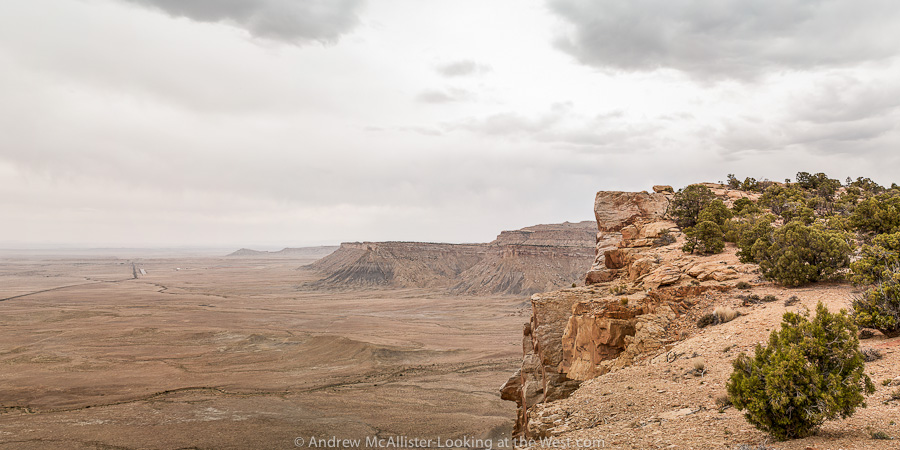
After about 20 miles a small trail leads out to the overlook below. The Trail was challenging in a few areas with tight turns, rocks and small ledges. Being new to 4-wheeling, I’m still getting to know the Xterra and what it is capable of when it comes to clearing rocks so I took it easy.  At a point about 3/4 of the way to the overlook I came upon some larger rock ledges an decided to walk the rest of the way. As I reached the overlook the wind picked up and it looked as if rain could come our way. Not wanting to get stuck off the main road I cut my time at the overlook and got going.

The rain held off and after viewing the rock art in Sego Canyon we headed back to the highway via Thompson Springs. Below: parting photograph of the Book Cliffs at the mouth of Sego Canyon. At this point the cliff rises 800 feet from the desert floor.

All photos in this post shot with the Leica M8.

Red Rock Pass

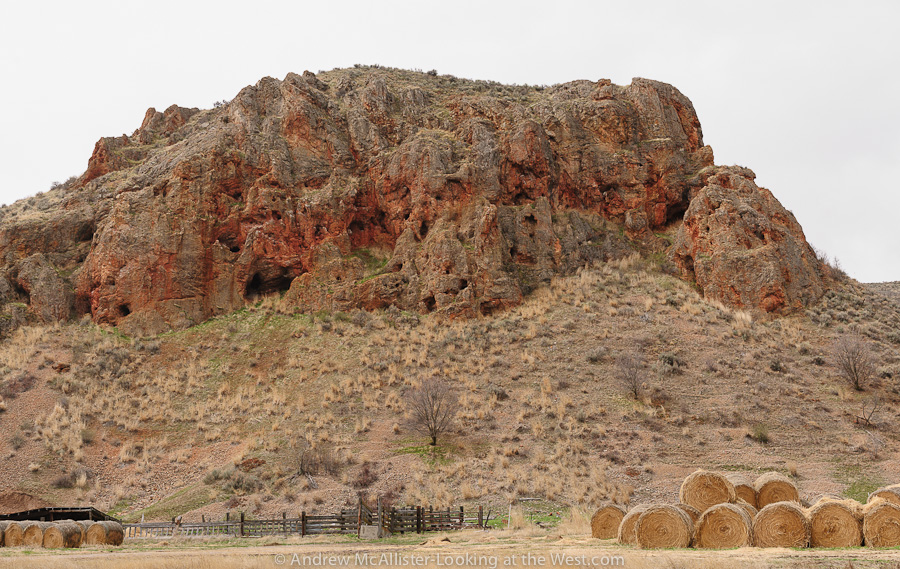
Researching one of my favorite areas in Cache Valley (Bear River Narrows) I came across Red Rock Pass. It is at the northern most end of the valley and the site of the cataclysmic event that partially drained the ancient Lake Bonneville. Located about an hour north of Logan, it is one of my favorite new places. The hazy light really brought out the red colors in the rock.

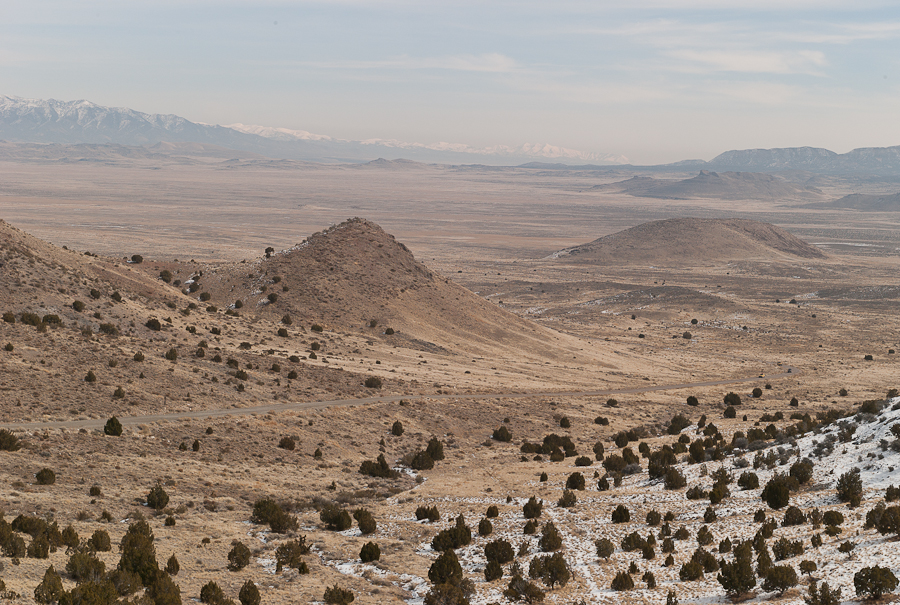
Looking South toward Caribou National Forest. The white on the poles is wind blown snow from earlier in the day.

The above shot looks at the western side of Red Rock Pass. The large hole above the corral looks like a mouth, above it an upturned nose and eyes. My lens could not fit the entire scene in so this is stitched from 5 exposures. On this first trip we returned to Logan via 15 South, took the first exit (Utah 36) Deep Creek Road and Weston Canyon. See my post Rolling Hills for a view of that area.

A few days later the weather improved and I headed up to Red Rock Pass to photograph the area in better light. Above view from the bend in the road. Very different light than the first visit. Stronger contrast and feel for the height but loses the subtle colors of the hazy image. This time I took S Back Red Rock Road and photographed the power transmission lines that I had seen on the first visit. Below view looking south across Red Rock Pass. The power poles below that look like giant pins are double circuit 345 kV lines.

With clearer skys to the North I traveled a short distance to Downey Idaho explored the small town on foot until it was dark. I returned to Red Rock Pass on my way back to Logan. Hoping for a patch of clear sky to illuminate the area as it was full moon. As I waited a short time before bailing do to it being cold, very windy and very creepy. Put it on the list of places to revisit in different weather. Definitely worth the effort to exit I15 drive and drive a few miles to check this location out if you are in the area.

2012 Pony Express run with UXOC

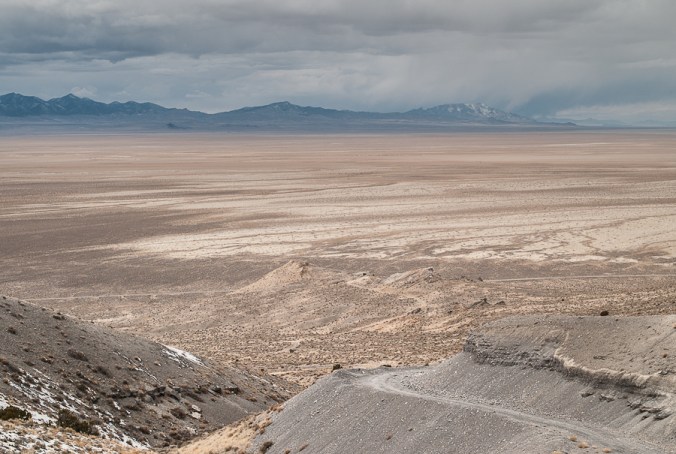
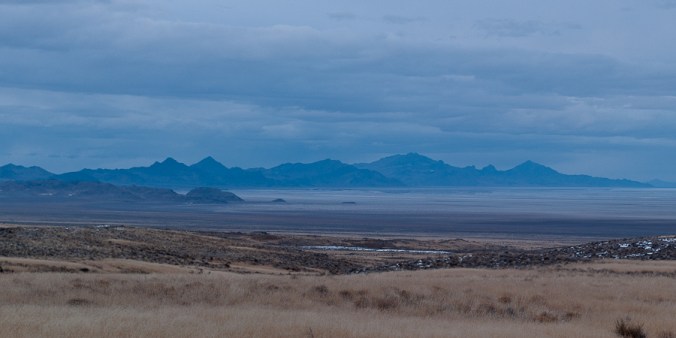
This past February 18th I joined up with the Utah Xterra Owners Club for their annual Pony Express run. Since moving to Utah this past summer and acquiring a 2006 Nissan Xterra I have been keen to get out and explore many of the canyons around Cache Valley. This past summer and fall the Utah Road and Recreation Atlas (Benchmark Maps) has been top on my reading list for finding new places to explore. One place I have been really interested in is the west desert area of Tooele, Juab and Millard counties. The area is also called the Great Salt Lake Desert and includes the Dugway Proving Grounds (no public access), The Pony Express Trail and a portion of the Historic Lincoln Highway. Plus it’s a really big wide open place with small mountains that look like islands and has tons of potential for photography. If that wasn’t enough my long standing project about looking at the west has up to this point primarily consisted of images showing how we experience the west through visiting National Parks. Joining up with an automobile club would be both fun and new way to think about how we experience the western landscape and meet some fellow Xterra owners.

We planned to meet at 9 AM in at a gas station in Lehi. This was my first time here and I have to say I was impressed with the town’s old commercial district and the grain silo. It was a perfect sunny morning with lots of activity going on. When the group of Xterra’s I was in pulled up to the gas station there were about 20 Land Rovers leaving on some adventure. Then I saw a group of road cyclists (about 30 strong) heading up the road. This must be a popular place. After everyone in our group of 11 vehicles had fueled up and did whatever we needed to do at the gas station we headed out taking 73 west toward Cedar Fort for about 30 miles then hit gravel road at Five Mile Pass and kept going west. After a short distance we stopped as a group to take the opportunity to air down our tires. This was something I was initially wary of doing since I did not have a way to air them back up. Talking to a few drivers I learned that by deflating the tires it would provide better grip and also absorb some of the road vibrations. With over 100 miles to go I decided to air down slightly and see if I noticed any difference. It was hard to tell how much difference it was making for my ride as I only aired down about 7 pounds. I’ll have to experiment with this more on future runs.
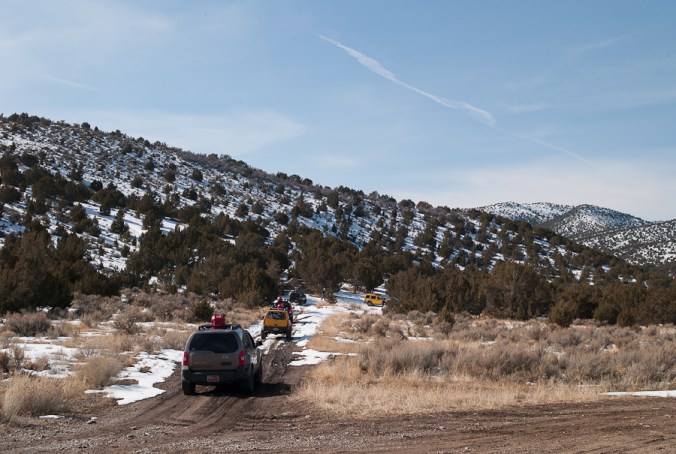
Our next stop was Lookout Pass Station. We climbed a small hill had a look around, snapped some pictures of our vehicles with their first mud of the day then headed down to the walled off pet cemetery at the base of the hill. We attempted to drive up Little Valley Rd. on our way to Simpson Springs but due to bad road conditions we decided to head back to the main Pony Express Road. Being new to 4-wheeling it was one of the muddiest sections of road I have been on. I think it was a good decision to turn back and try it again when it has dried out.
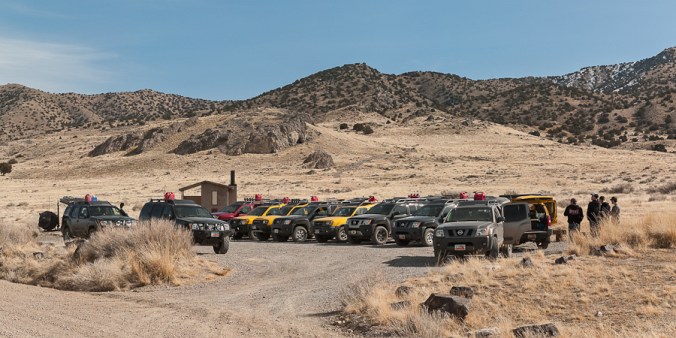
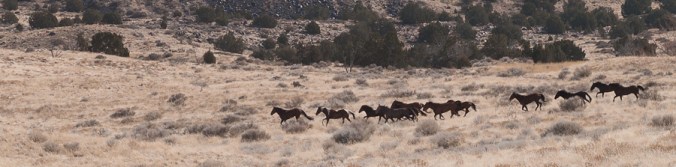
Soon after we arrived at Simpson Springs Pony Express Station and stopped for lunch, conversation and picture taking. The highlight of the stop was watching a helicopter rounding up what I assumed to be wild horses. After some time the horses actually ran pretty close to where we were parked and everyone tried their hand at photographing the action. I got a couple of shots off before my camera battery mysteriously died. After some time we geared up and headed west toward Dugway Pass. Between Simpson Springs and Dugway Pass it’s about 20 miles of straight and flat road. Leave plenty of distance between vehicles (dust and visibility) and watch your speed. It’s easy to start going fast and you have to remind yourself that gravel roads handle very differently from highways. A hole in the road or dip could put you in a bad situation a long way from help.

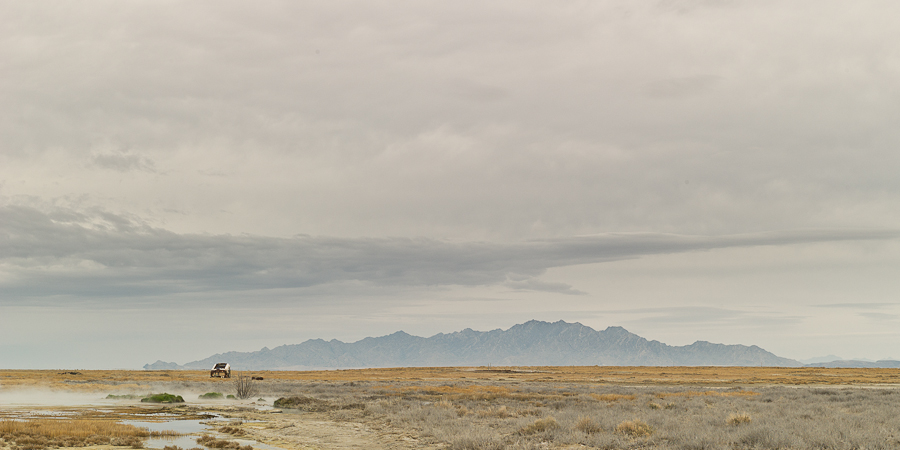
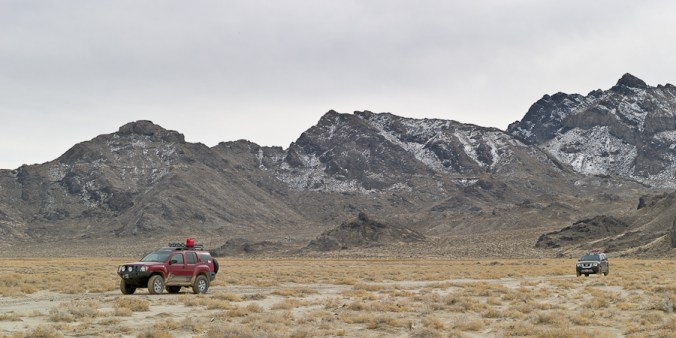
After a restroom break at Fish Springs National Wildlife Refuge we stopped at Wilson Hot Spring. This was where my Xterra got muddy. The drive out to the spring was a sticky mix of mud, sand and salt. At one point I was sliding toward a very wet patch that had boards across it; some kind of sign not to go that way. Luckily I stopped before sliding into it and was able to back out and take the little bypass. The sticky mud reminded me of a passage in Earl Swift’s book The Big Roads,  “a truck convoy finding the Siberling Cutoff impassable, set off across the salt. This would have been a risky move in a light runabout. In a giant cargo hauler the results were inevitable. every truck that ventured onto the flats broke through and became hopelessly mired; even a Caterpillar tractor failed to achieve any traction in the stinking goop that lurked beneath the surface.” (page 68). The story ends with the trucks being carried out by hand. I’m glad to be living in a time of better roads and capable vehicles. The story is a good reminder of the dangers of traveling in the west desert of Utah.

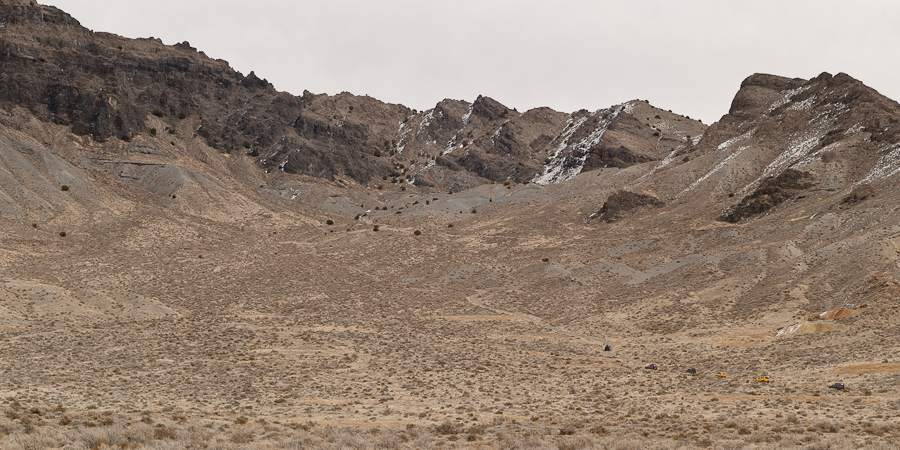
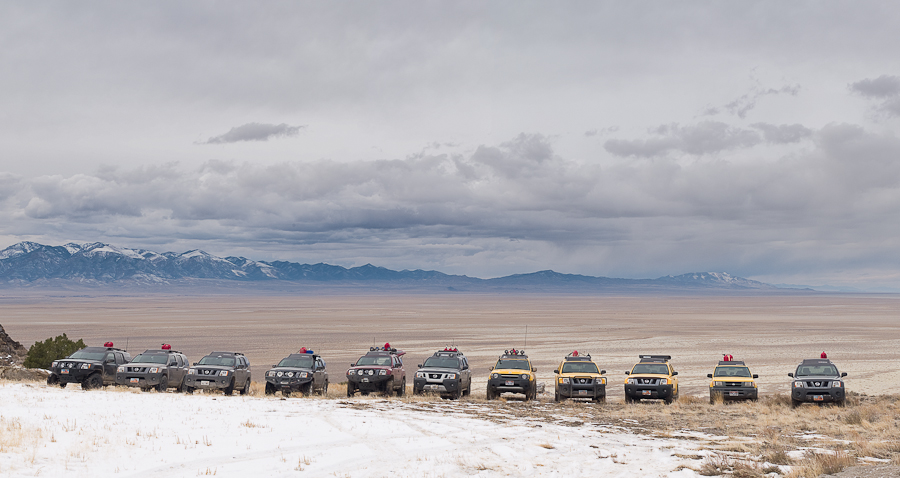
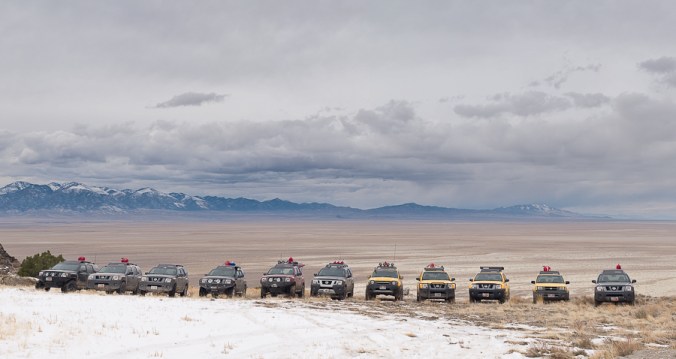
A little farther down the road on the other side of the Fish Springs Range we took a side road at the Utah and Emma Mines. It was a nice climb up to the top. I waited on the main road until the end of our convoy as I wanted to get a shot of all the Xterras going up the road before I joined the party. The drive up the old mining road ended with everyone parking in a row with a spectacular view of the Deep Creek Range and Snake Valley. In low range and third gear I only had to tap the brakes on a few sharp bends in the road on our way back down. At this point we would be heading in generally North West and would go through the very small town of Callao.

About 5 miles out of Callao we turned onto a section of road that is marked both as the Pony Express Rd. and the Old Lincoln Highway. Except for one spot the road was dry but it was slow going as the road wound through many washes and small hills. This was the only part of the trip where we had traffic coming from the other direction. I can only imagine what it must have been like traveling in this area with a 1930’s or 40’s era vehicle (loose steering, breaks that lock up, no seat belts) and then coming around a curve to find another car headed your way. After 25 miles we were back on asphalt. Realizing we had missed the turnoff to take us to Gold Hill; members of our group talked via radio to see who wanted to go to Gold Hill and who wanted to just head to Wendover. Most of us decided to go to Gold Hill and arrived around 5 PM the place was literally a ghost town. I now understood why there were so many photos on the web of this old store front. It’s about the only thing there. I joined in and shot about 30 frames of the building from a few angles so I could stitch together a panoramic image of the place.
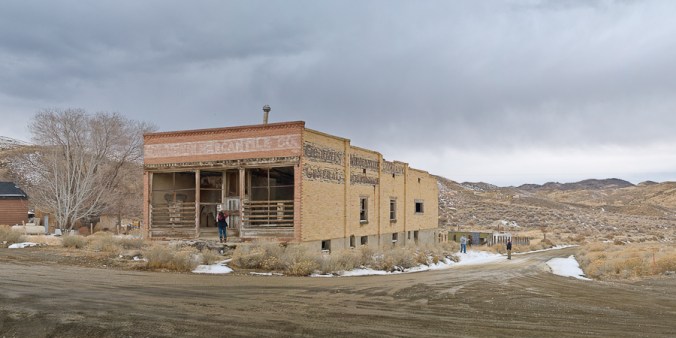
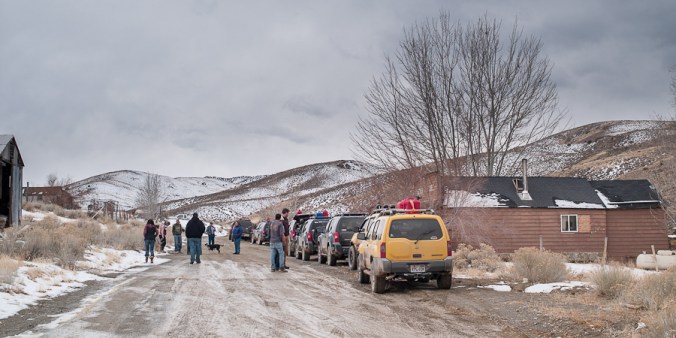
Next stop Wendover. A quick dinner and then the trek back to Logan. Since a winter storm was hitting the Wasatch Front I opted to take a northern route back to Cache Valley via the Old Midland Trail (Utah 30) and hopefully avoid traffic and snow. As it turns out it was the best option. In two and a half hours I made it to Tremonton and entered Cache Valley via Riverside. At Beaver Dam the snow had started and the road conditions deteriorated rapidly. Crossing the valley the snow just kept coming and traffic slowed to a crawl. My journey that had started at 7 AM that morning was completed 17 hours later at 11 PM. The only trouble I had was getting up my steep and snow-covered driveway. But I made it.

©2012 (images and text) Andrew McAllister

All images photographed with the Leica M8 and Zeiss ZM lenses.
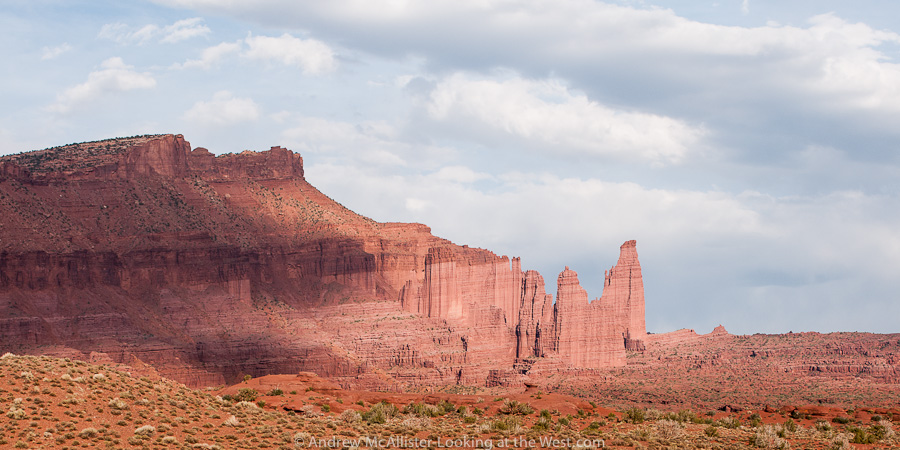
The West Hills in Northern Utah

The West Hills of Northern Utah

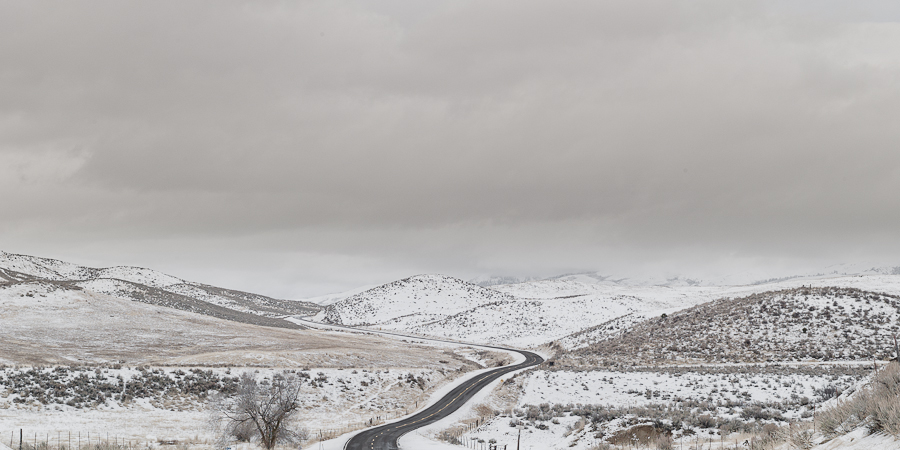
The West Hills are just north of Tremonton, Utah and cradled by I15 and I84. The gorgeous rolling hills have many photographic possibilities. I’m glad that I live close to this area and look forward to visiting then in different seasons. The route I took was 30 west out of Logan to Riverside and then up north toward Plymouth and then west again toward Nucore Steel. From there the road changes to compressed gravel and you enter Johnson Canyon. The canyon is basically a route through the gently rolling hills, nothing like Logan Canyon or anything in Southern Utah. The area is a Cooperative Wildlife Management Area with No Trespassing signs about every 100 yards, must be a popular hunting area. After a short drive you arrive in Whites Valley. At the only intersection you choices are head West to go to the Let The Good Times Fly Hunting Club or head South and end up at Exit 32 (Ranch Exit, no services) on I84. At that this point I could have gone south on I84 toward Tremonten and then back to Cache Valley via Riverton or Brigham City. I chose to back track to get a second look at Nucore Steel and drive a road that two old guys I talked to earlier in the day suggested. That road is Short Divide and it crosses Gunsight Peak on the north end of Cache Valley. From that road there are some good views of the Wellsville Mountains. I was lucky that the road was open as it is listed as closed winters and it was clear most of the way. A few stretches that get no direct light had some serious ice to contend with. I’ll defiantly be back when it warms up. This area has some hiking possibilities.
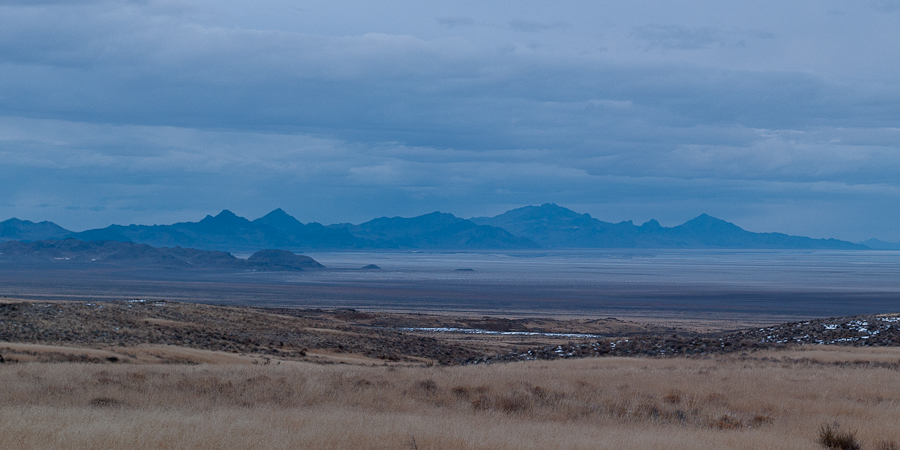
Camera: Leica M8 w/ Zeiss zm 50/2

©2011 Andrew McAllister (text and images)

First Snow

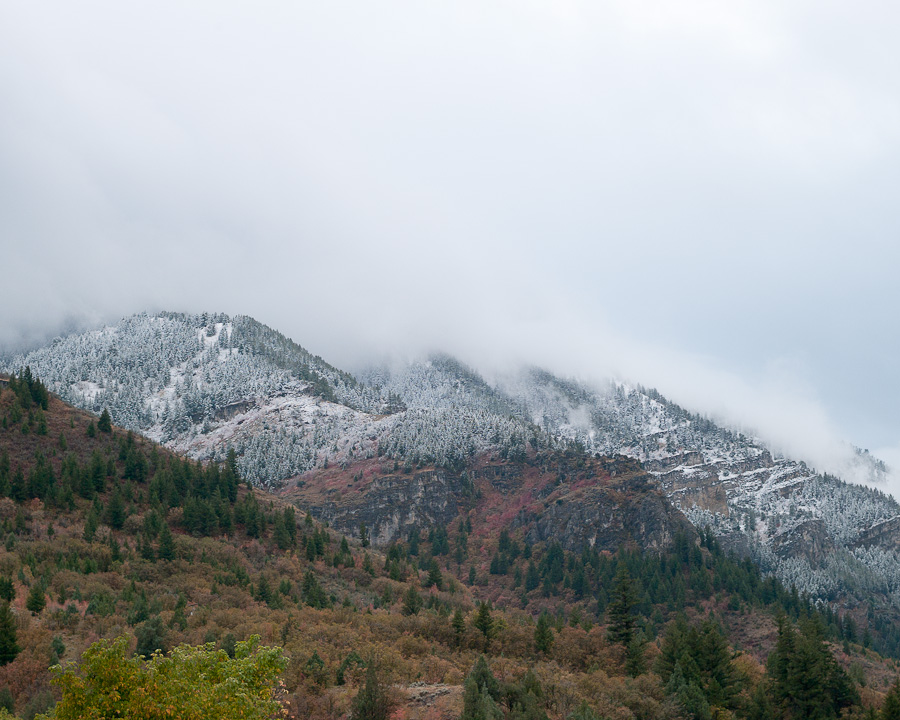
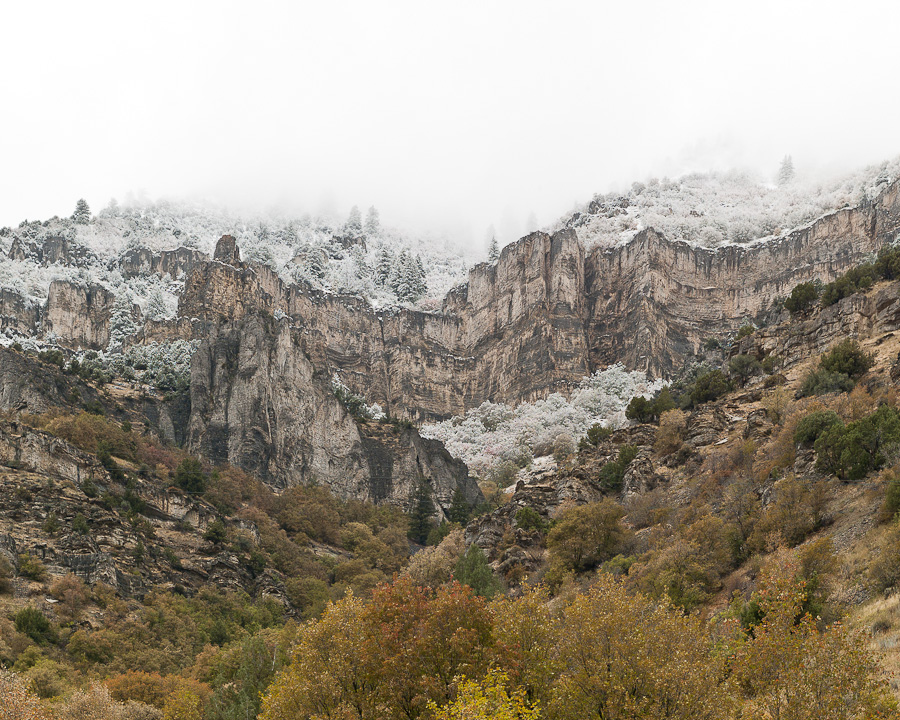
After months of sunshine finally Northern Utah had a few days of rain and clouds in the forecast. A storm coming up from the south decided to bring some cold temperatures and snow at higher elevations. As it started late Wednesday I took a quick drive up Green Canyon (I’m based in Cache Valley) to see what was happening at the higher elevations with regard to weather and road conditions. The next afternoon as the cloud cover started to pull back a bit I could see that indeed elevations above 6000 had snow cover. I decided to head out to Blacksmith Fork Canyon and see how the snow was mixing with the fall color and the cliff faces. I found a few good spots to photograph along the way toward Hardware Ranch. About half way there the clouds and cliff faces were looking good near the Left Hand Fork of Blacksmith Fork Canyon. I decided to check it out and maybe go as far as the old ranger station that I had photographed this past summer.

Road conditions were generally ok for the weather. A little sloppy in areas but those spots were few and there were a few ranchers working in the area with much larger vehicles and trailers so I figured the roads were acceptable. Stoping for photographic opportunities and the occasional group of cattle in the road we made it to the old ranger station in good time. After a few shots I decided to go to up to the junction of Herd Hollow and see how that was. At this point the the roads were in good condition, compacted dirt and gravel mix with larger rocks here and there and not sticky at all. Now this area is listed on some maps as a 4×4 road and on a ShoShone Trail map from the Forest service it is listed as most difficult but not ATV only. I decided to give it a go, soon I came to a sign saying that the road was not suitable for passenger cars 6 miles ahead. Since the Nissan Xterra has higher clearance than a passenger car we kept going. Now this road passes two springs and runs along the base of Boulder Mtn. ending at the junction of trail 3 (Shoshone trail map) which is rated easiest. If we could make it to the junction and the steep hill out of the canyon was passable this could be a round trip to Hardware Ranch. But was not to be the case this time.

A few miles up the road I came to a point where it looked like trouble could be ahead. I got out and walked the road for a bit and it appeared that no full size vehicle had bee through there in some time. The good part of the road had been used for ATV “cars” that have a sightly larger wheel base than an ATV but smaller than a truck. The trail had a steep bank on the left side that a truck could drive on without tipping and the right side had pretty thick cover of vegetation. Now this part was technically doable albeit with some major scratching on the right. The situation as I saw it was there was no way I was going to back out of this spot should the road be not passible up ahead as the sign at the trailhead had suggested. It was just me and my dog Mirabelle, and there was nothing she could do to help in a situation should one arise. Had I been traveling with another vehicle or at least another person experienced in off highway driving maybe I could do it. Oh yeah and it was starting to snow again. Time to back out of here and stay on a more defined and better maintained road. We had seen plenty of gorgeous fall color and snow caped cliffs, had a nice drive and we not looking to do any camping do to getting stuck.

Back at the junction of Herd Hollow Rd. I had a decision to make. Either head back on the Left Hand Fork which I knew was solid or take Herd Hollow and end up in Logan Canyon. So the plan was to take Herd Hollow as far as we could and if passible end up at some nice locations to get shots of the snow and fall color. A short distance up the road and past the first cattle gate I came up to another truck. That’s good news. Some one else on the road should we get stuck and track to gage the road condition. Now I’m new to 4 wheeling and this was going to be the first time I heard the slipping indicator in the Xterra. The first sticky spot was just a dozen yards long so it was a bit of a warning of how the Xterra would handle these sections of the road. When on sold ground I stopped to take a few shots of the landscape and the road and pressed on. By the time we made it to the junction of roads to Logan Peak and Old Ephram’s we had driven a few more of these really slick sections. Not quite white knuckle but definitely not a casual drive. Having the tracks of the truck in front of me as a guide of where to go and where not to go was helpful on this first trip through the mud. I kept the truck moving a good speed so not to sink or loose grip but just fast enough to keep it under control. I wanted to make it though wile doing minimal damage to the road. I’m not a fan of people that just blast through these areas just to get the truck muddy and mess up the road. I also did not want to drive off the road surface and make the road wider than necessary.

The road down from the junction to Logan Canyon was well maintained and uneventful. A nice change and appreciated. From there we headed toward Tony Grove taking plenty of stops along the way to photograph the landscape covered with a thin layer of snow. Though this subject matter has been done before by many photographers it is such a nice visual that I just give in and go for it. Overall this first snowfall and our journey to look at it was a success. New places, experiences, appreciations and few good images along the way to remind and inspire more exploration of Northern Utah this winter.

A trip to Salt Lake City from Logan

In the spirit of adventure and exploration my wife and I decided to take a scenic drive to SLC from Logan. Looking at maps and guide books we decided to drive some of the back roads and if possible avoid I15 or I80 as much as possible. We decided to take Main St. south out of Cache Valley through Nibley, Paradise and Avon and then connect to South Canyon Rd. (Rt.162) and cross through Cache National Forest to the town of Liberty.

From there we would drive around Pine View Reservoir and stop by the Monastery of the Holy Trinity in Huntsville. As one would expect it is a very quite and peaceful place. We purchased some honey that the monks sell and had a nice little chat with the man in the shop who said we had been at the monastery for 60 years. To bad they don’t make or sell Trappist beer as the grounds would make a nice place to relax and enjoy a bottle and contemplate the landscape.Leaving Huntsville south on Trappers Loop Rd. (167) toward the Town of Mountain Green. This road had spectacular views of De Moisy Peak and the area around the Snowbasin ski resort. From Mountain Green we followed I84 on a road aptly named Old Highway Rd. to Morgan where we continued south on Rt. 66 (not the Rt.66 as we are about 1000 miles north of it) into East Canyon with a few stops at East Canyon Reservoir. Next we had to drive over Big Mountain and then make the decent to Parlays Canyon where we would pick up I80 and continue into SLC.