Southern Utah: Ghost Rocks Viewpoint

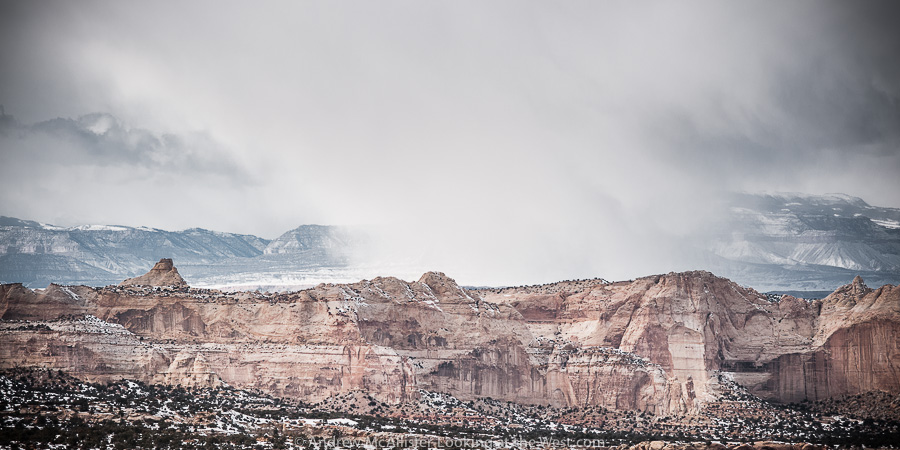
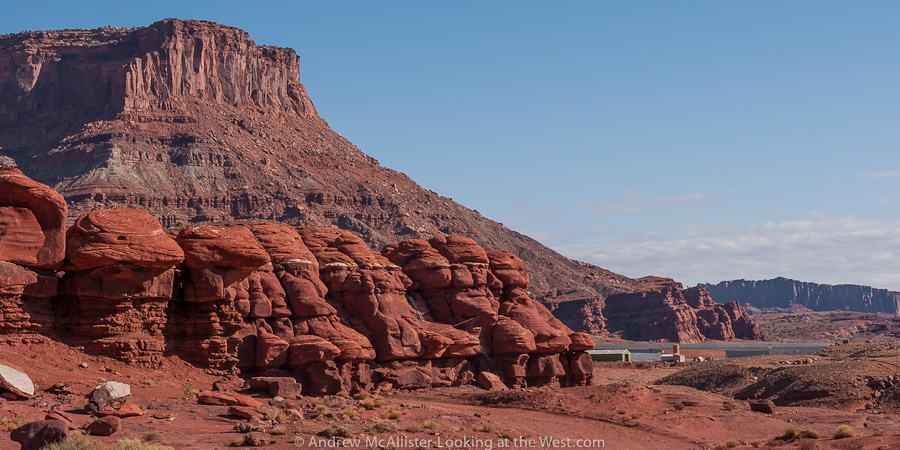
Hunter Power Plant from Ghost Rock

Above: Huntington Power Plant from Ghost Rocks Viewpoint along I-70 in Southern Utah.

Updated (3/16/13) from Wikipedia “The highway then ascends Ghost Rock Summit, the highest point for I-70 inside the swell. At the summit is another view area overlooking the Little Grand Canyon of the San Rafael River.The summit is named for unusual rock formations nearby. The Ghost Rocks themselves are at 7,405 feet (2,257 m), although the freeway is slightly lower.” Read the whole article on building I-70 through Utah here. 

20130209_Ghost_Rocks_Viewpoint_010

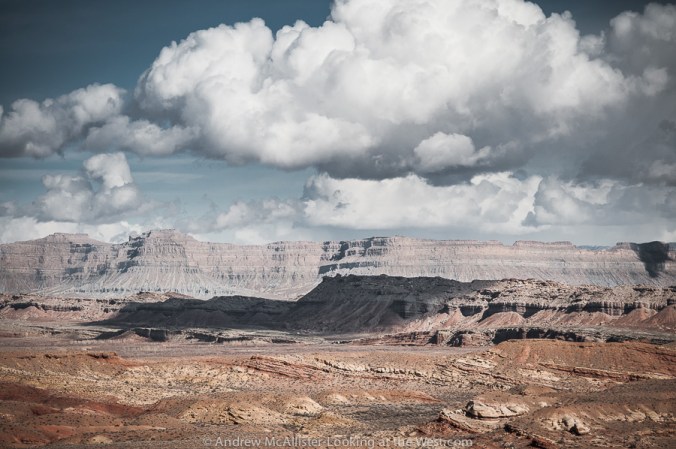
Above: Cloudburst above Castle Valley Utah.

Southern Utah: San Rafael Reef


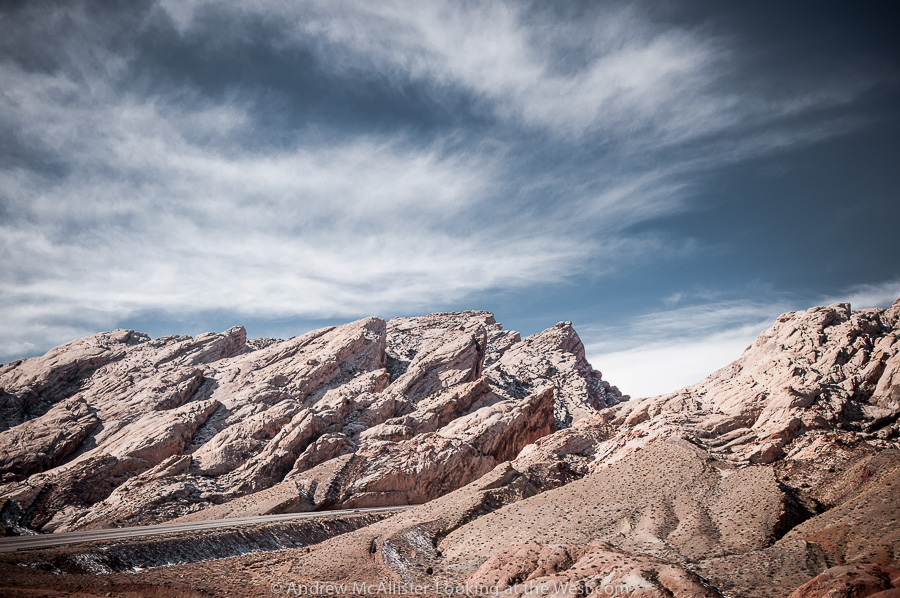
San Rafael Reef in Southern UtahAbove: I-70 road cut at the San Rafael Reef in Southern Utah. To avoid a snow storm on Soldier Summit I decided to take I-70 for my return route from Moab last month. What a good decision it was. The San Rafael Reef is visible from my usual route (Utah 191 from Price) but I had never been this close. If you are traveling I-70 through this area plan extra time to stop at all of the scenic overlooks, they are well worth it. Taking this route greatly expanded my desire to explore Southern Utah. Expect more information and photos from this amazing part of the state.

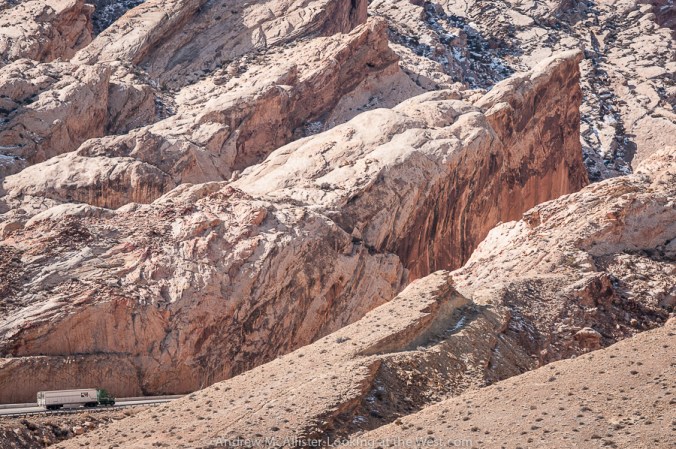
San Rafael Reef in Southern UtahAbove: Detail of the road cut at the San Rafael Reef. Didactics at the rest area explain the massive project to widen a slot canyon into the modern highway we travel today.

San Rafael Reef in Southern Utah

Above: I-70 Rest Area at the base of the San Rafael Reef. Photographers would be crazy not to stop.Book Cliffs from the San Rafael Reef in Southern Utah

Above: Looking toward the Book Cliffs from the San Rafael Reef.

How many of you have been to this part of Southern Utah?

Southern Utah is not all red rock

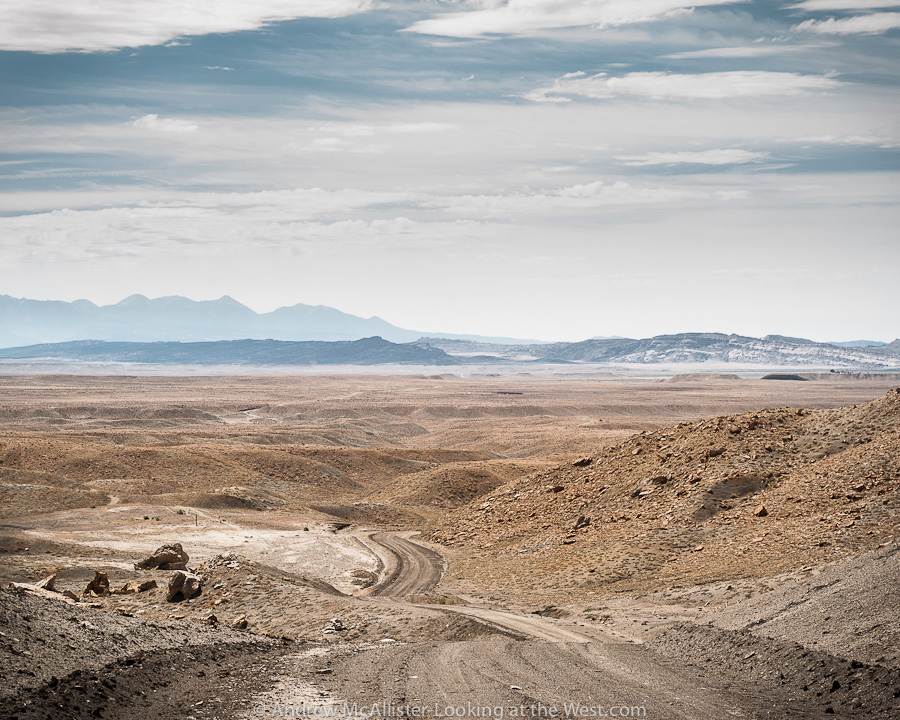
Driving the desert of Southern UtahAbove: Thompson Pass looking toward Moab. If you look close you can see Crescent Junction and State Highway 191. This is from the base of the Book Cliffs looking South. The road is a nice little side trip if barren landscape, boulders and the occasional Antelope is your thing (it’s mine). I read that somewhere along the Book Cliffs a Tar Sand extraction operation is starting up. Mixed feeling on that. Anyone know the exact location? I’d like to do a before and after shot if it’s lot to late.

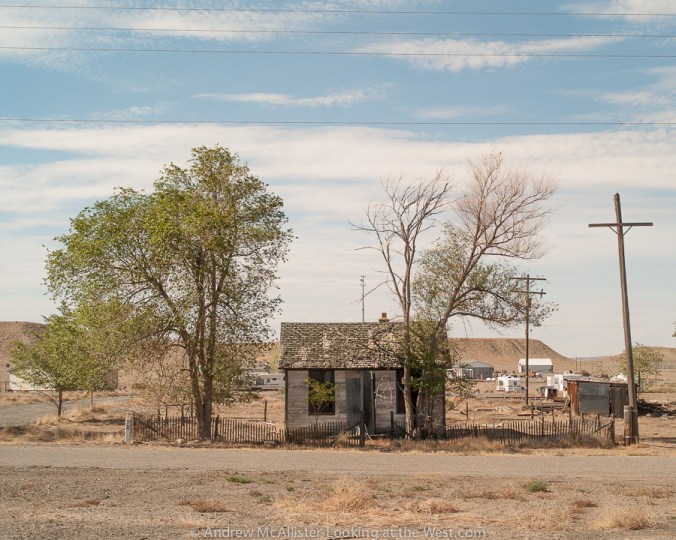
Almost Ghost Town: Thompson Springs, Utah

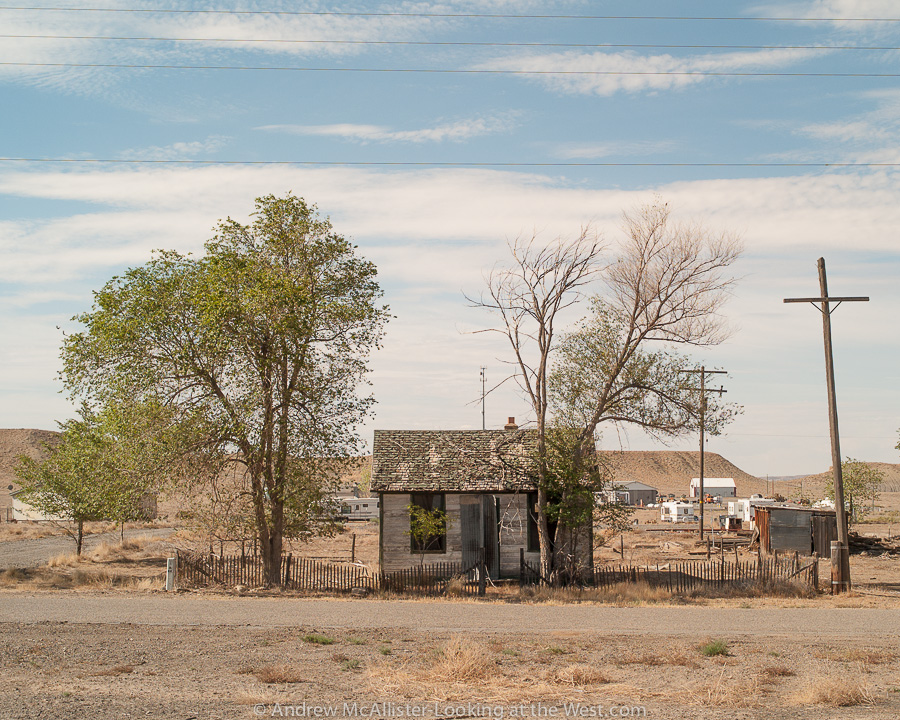
Above: Almost a ghost town, Thompson Springs, Utah. I have spent a lot of time looking at this humble little house making up little stories about what happened here. This little house from another time with it’s yard clearly defined from the larger surrounding. A power pole that marks the location like it was a road side casualty. Not generally a fan of the photo cliche’ of dilapidated buildings or “Ruin Porn” I usually pass these structures by and leave them to other photographers. Something about this one…
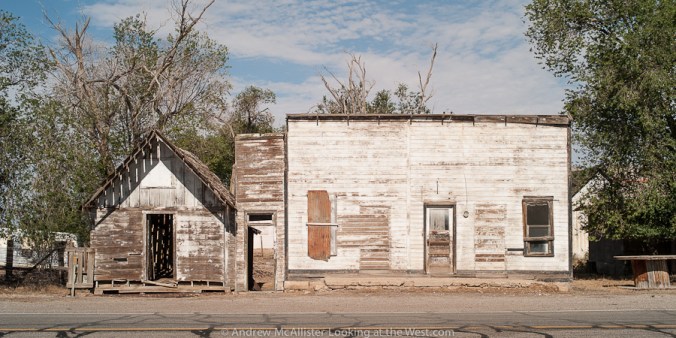
Above: Abandoned structures in Thompson Springs. Would love to find an image of what was once here. Building on the left looks like it was used for some sort of agricultural storage. Look closely at the space between the buildings. A sealed (at one time) passage. The structure on the right looks like two buildings sharing a common front. The left one had a door and a window, the right one a door and two windows. The doors are tricky. Was the original door between the windows and then at some later time when the two fronts became one the door moved to the center and old door locations filled in? I’m probably to respectful for my own good as a I honor privet property and only shoot from the road. Next time I’m down there I’ll have to find someone who knows.
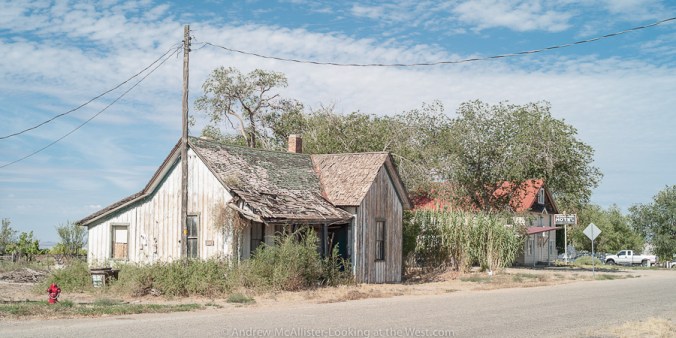
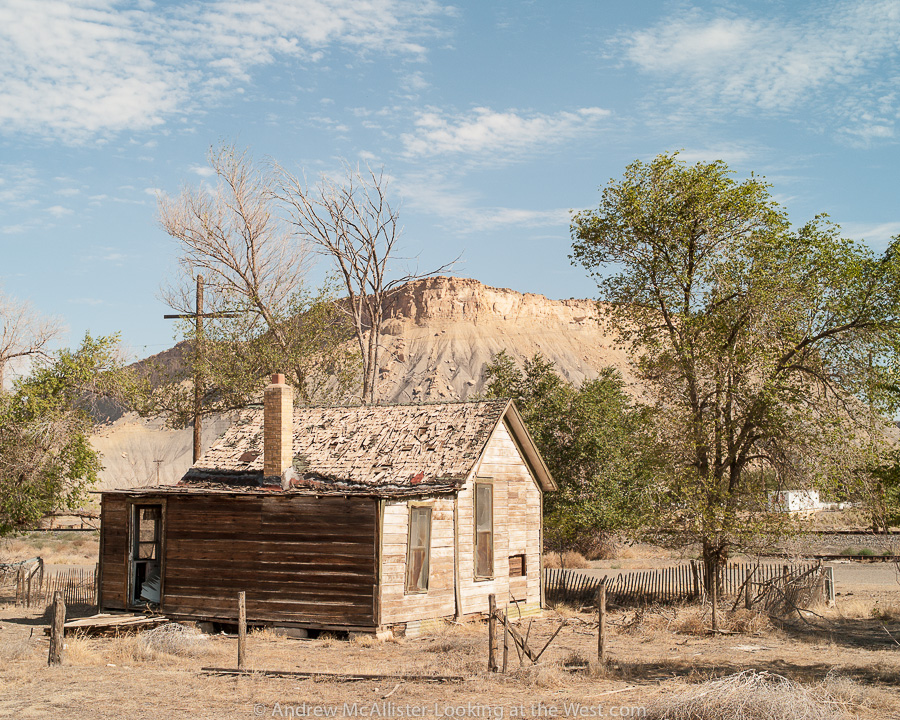
Above: Almost ghost town. Classic abandoned house next to the Desert Moon Hotel (actually a small trailer park for temporary workers that live out of campers parked there. And the Hotel is for sale if anyone is interested.

Above: Detail of the doorway mystery.

Above: Shadow portrait at the Thompson Springs Diner. The diner is pretty boring both inside and out. I thought this was the best photo for the location. Thompson Springs has a few other buildings including a Hotel with about 20 rooms (all with the doors open and full of trash and graffiti) The train depot (abandoned) and a few occupied residences. Someday I’ll return and photograph them as I’d like to meet the residents of this almost ghost town. I’m sure there are some interesting folks there.

Below: Backside of my favorite house in Thompson Springs.


No Town Utah: Floy

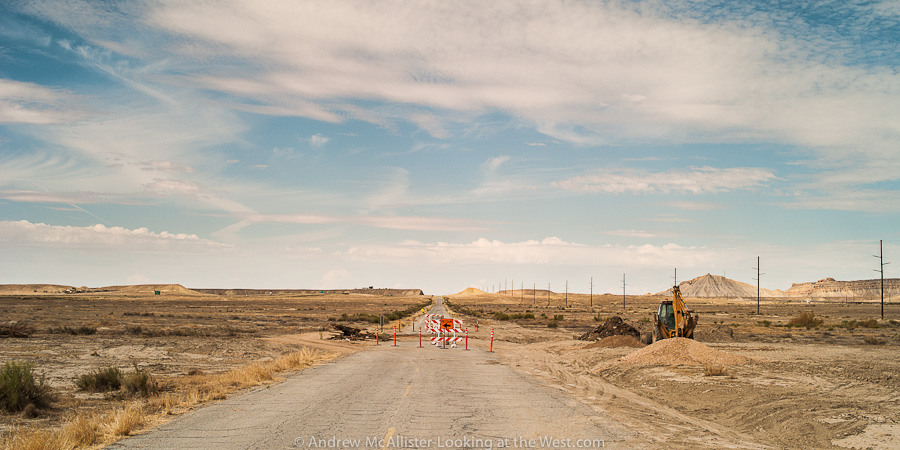
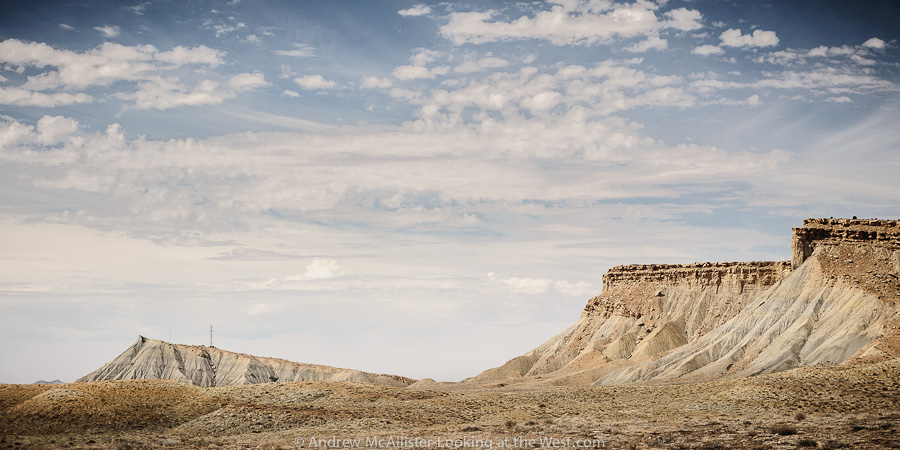
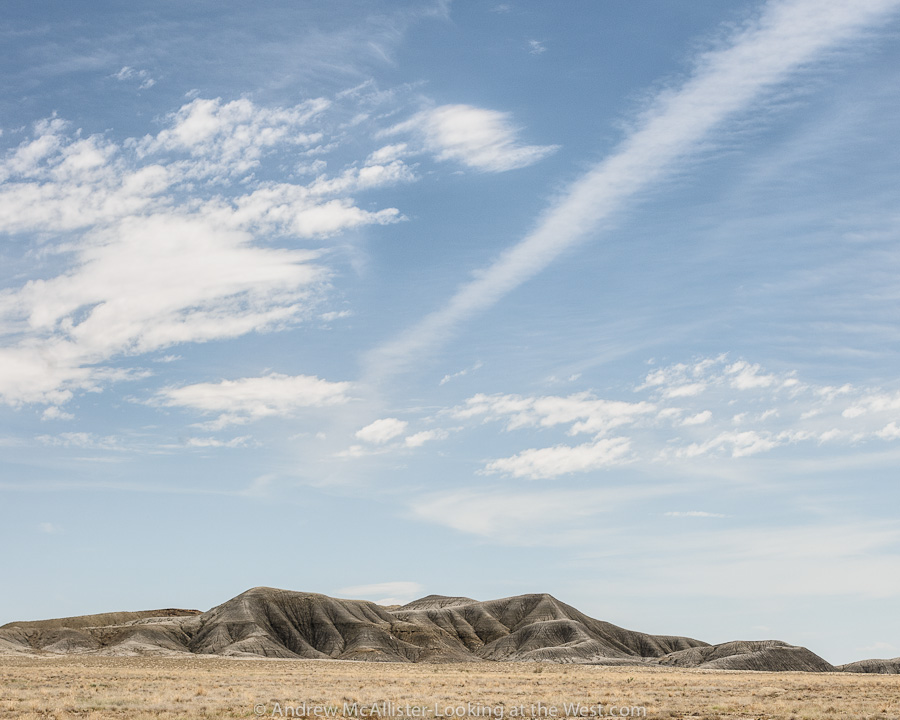
In Southern Utah on the way to Moab from SLC there is a stretch of lonely lumps that the highway passes. Interesting little piles of earth away from the Book Cliffs out in the middle of nowhere. Usually one passes them by at a high rate of speed for they are on I-70 between Green River and Crescent Junction and if you are going to Moab, well you are almost there, why stop. Same can be said of the return north from Moab, we just started the drive and have hours to go, why stop. Recently I had the opportunity to make the drive to Moab by myself and managed to make the 4 hour trip last 8 hours due to lots of stopping and looking around. Well worth it if you are so inclined. On a map the area pictured is called Floy. It’s not a small town or a ghost town it is a “no town” sometimes known as a Ranch Exit (no services).

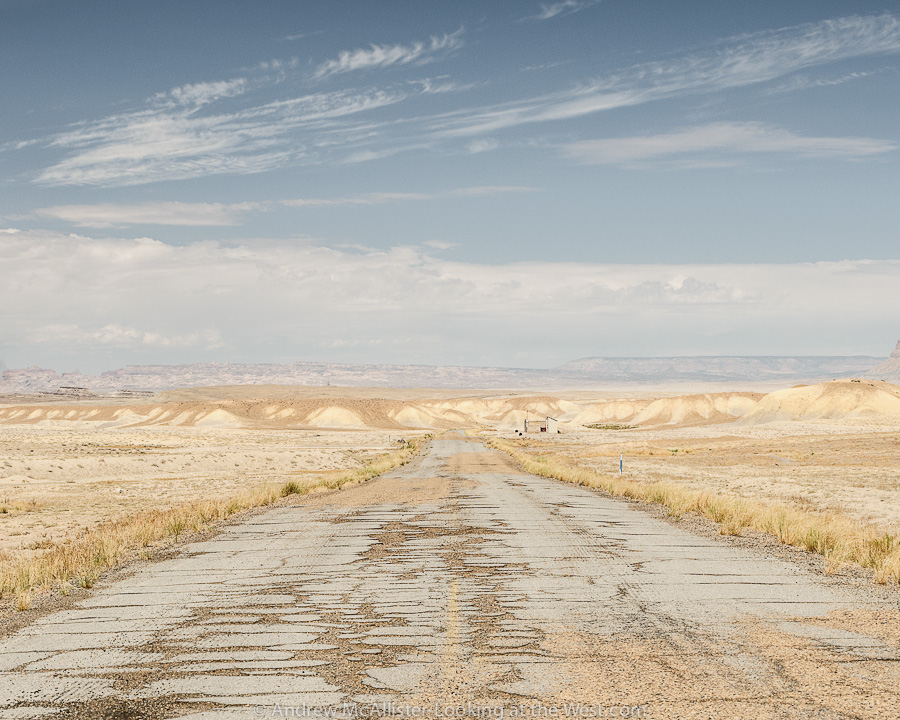
The classic cliché photograph of the open road is one I’ll never tire of. Should you take the ranch exit at Floy this is the road you will be traveling on as you go west to Green River. After a few miles of rough road you will wonder why you are taking slow a desolate alternate route when a much smoother and nice road is just a mile to the South. For starters you can stop just about anywhere. The time I spent out there the only other vehicles I saw were a pair of adventure motorcyclist. Stop and look around, take pictures, think about stuff, look for animals, whatever. When these pictures were taken it was pushing 100 degrees and the place was like an oven. Sunscreen, wide brim hat and long sleeve linen shirt are all recommended. In the 30 minutes or so that I was out in the sun my aluminum tripod legs and camera became hot to the touch and I downed a liter of water. This two lane road with minimal upkeep reminded me of being a youth in the 1970’s and traveling great distances in a VW Bug with the windows down, arm hanging out and hot as heck. Traveling in the air-conditioned and window tinted vehicles of today sometimes feels like cheating. I can imagine what it was like traveling these roads in an old Packard or other late 40’s car would have been like. I have nothing against the modern highways but it is the roads less traveled (paved or dirt) that are the most enjoyable for me.

Exploring Canyonlands: Potash Road and the Shafer Switchbacks

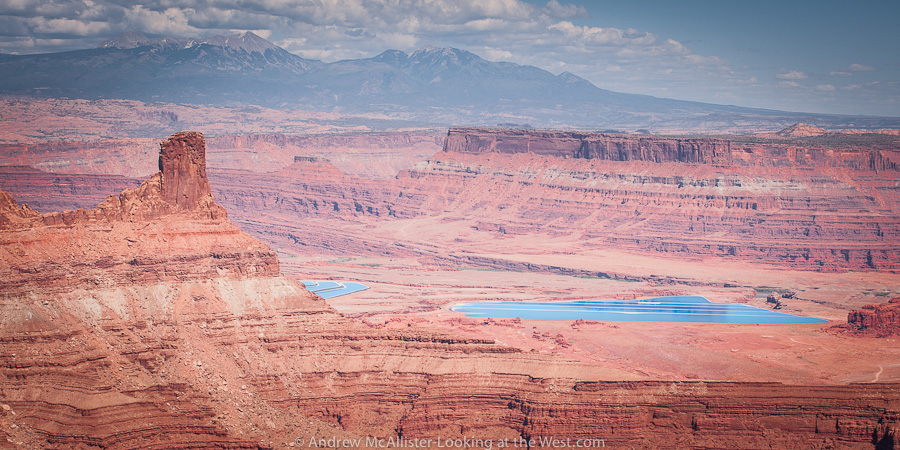
The Shafer Switchbacks have been on my to do list since I caught the off-road, 4-wheeling, Overlanding bug a few years ago and on this last trip to Moab I had the opportunity drive them. This route was on my mind both from reading the Guide to Backroads around Moab and from viewing posts from the blog New Mexico Backroads a few weeks before my trip. Needless to say I was psyched! Above: Evaporation ponds and red rock. Below: Really red rock! If you look close in the center of the picture you can see a few ladders that are part of a ropes course.

Below: Looking up at Dead Horse Point State Park from Potash Road. Classic western landscape.

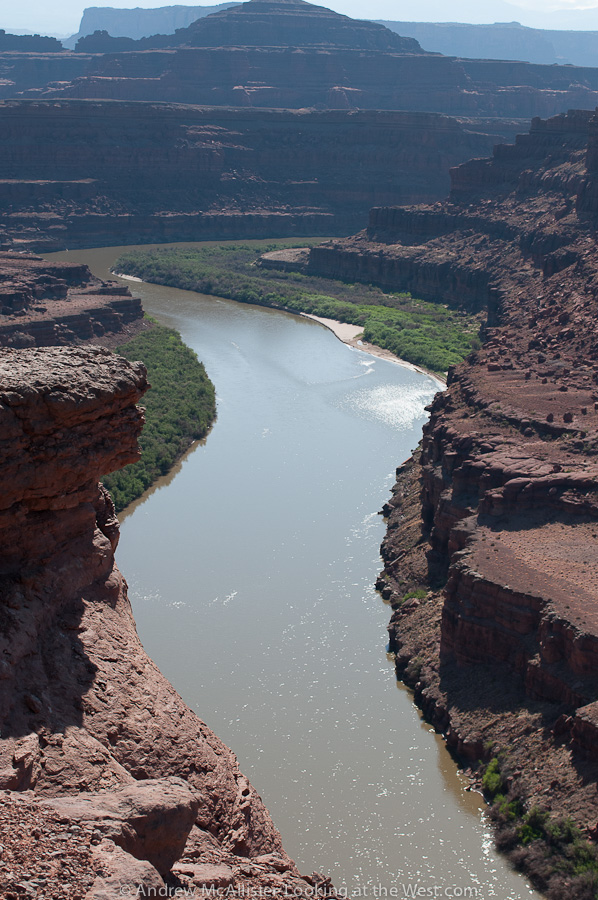
Below: Thelma and Louise Point looking at the Colorado River.

Below: Looking North from Thelma and Louise Point. The rock wall in the image produces amazing echo with 4 or more distinct slap backs. A very cool stereo experience. Give it a yodel and see for yourself. A few miles later we would enter Canyonlands National Park and be greeted with a small but very rocky section of road that required low range gearing and all of the driver’s attention (thus no photos of this section). My stock Xterra handled the rocky section beautifully. (edit summer 2014 the road has been improved and is now very smooth. Conditions can change with one good rainstorm, if in doubt contact the National Park.

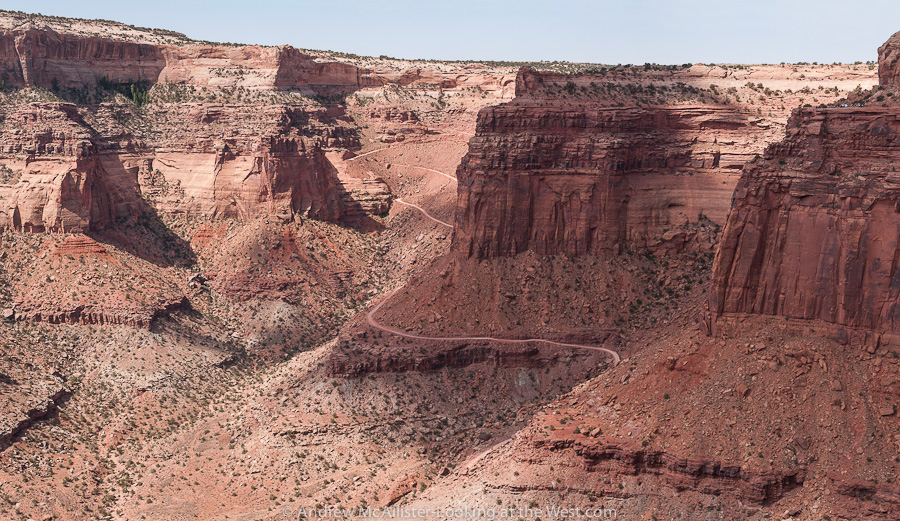
Below: Shafer Switchbacks. Notice the very small people in the top right corner. Next time I’ll have to remember to stop at a few points and get some pictures. For my first time up I just kept my hands on the wheel and eyes on the road. The switchbacks and the climb were not that bad however I was not ready for the long drive on the narrow shelf road once we were at the top. That section was a bit nerve racking.

Below: Looking down on a group of cyclists that were starting multi day trek on the White Rim Trail. The road was first used as a cattle trail and later as a road for mining trucks. The thought of driving trucks on that road makes me think of the movie The Wages of Fear.

Exploring around Moab: Fisher Towers

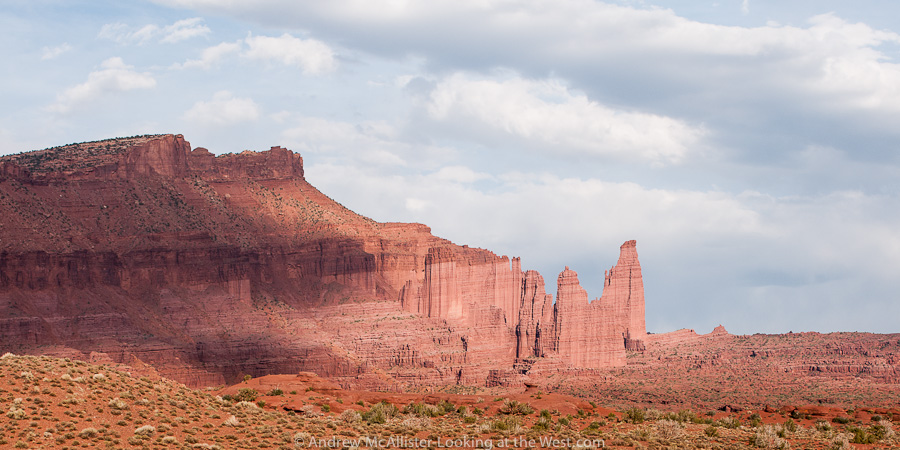
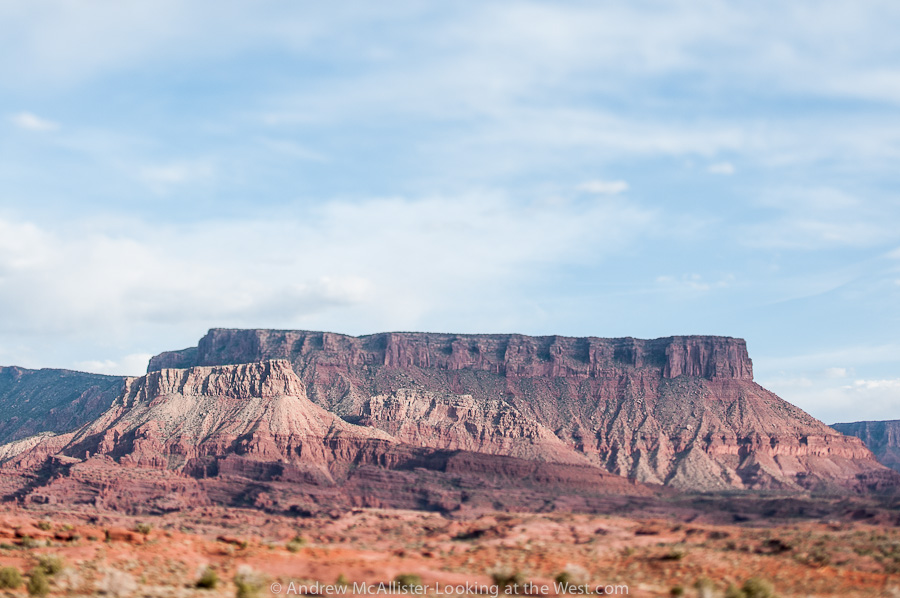
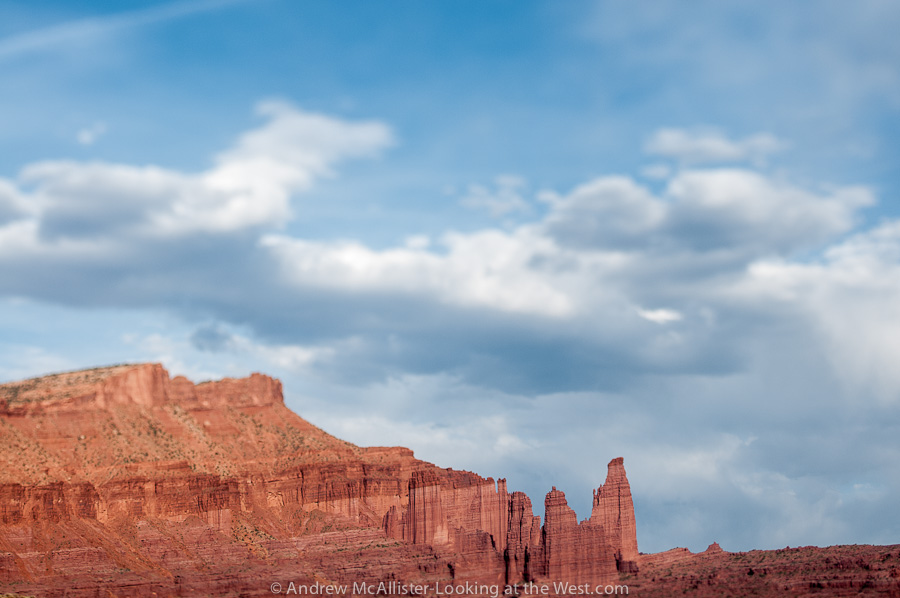
On our last trip to Moab we decided to not just take 191 south from Cresent Junction but instead go north of I-70 and do some exploring in the Book Cliffs and Sego Canyon. That part of the adventure ended in the (almost) ghost  town of Thompson Utah and the next part would be the Colorado River Scenic Byway. A pullout near Fisher Towers would be the location of a quick road side dinner and some creative photography. Recently I have become interested in the technique of tilting the camera lens for artistic and technical effects. Most of the examples I have seen are of city or industrial scenes so I thought I would try it out on some southern Utah landscapes. Above: Fisher towers. Below: Mesa near Fisher Towers with tilt blur effect.

Below: Fisher towers with with tilt blur effect on the sky and the top of the red rock.

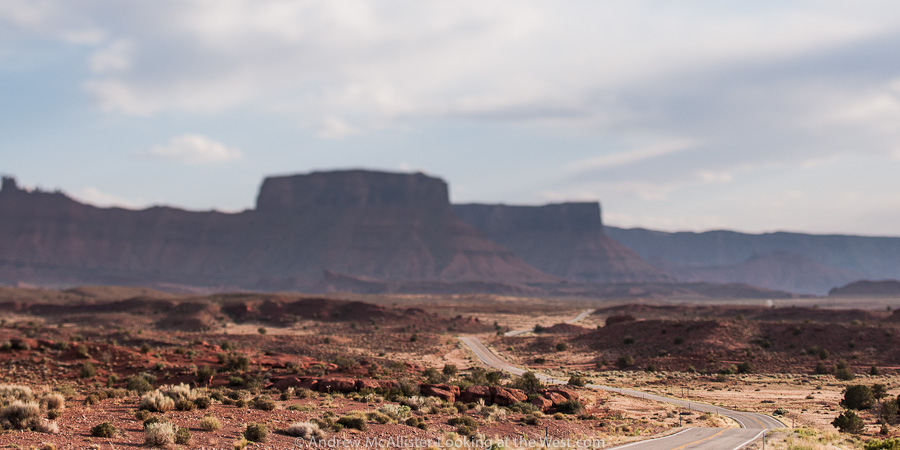
Below: Road into Moab (128) with tilt blur effect. It takes some practice using the lens in the field and getting the effect where you want it. The look is easily faked in Photoshop, for me though it is way more interesting to think about and apply the technique in camera.